Monday, June 13, 2011

Tour the Showcase Barley Farm

This time of year, the Conservancy's "field season" is in full swing, and our staff are at working hard at various projects around the state. It's also the time of year when you have plenty of opportunities to see what's happening at Conservancy projects.

It's a busy month, and we'll be sharing opportunities here. To get things started, you can now sign up for a tour of the showcase barley farm at Silver Creek, owned by John and Elizabeth Stevenson.

The tour is Thursday, June 23 and also include Ernie's Organics near Shoshone.

The tour is free and includes lunch at Silver Creek Preserve.

The showcase barley farm, funded by Miller-Coors, demonstrates conservation practices including retrofitting irrigation pivots to save water (up to 400,000 gallons per two-day irrigation cycle), establishing stream buffers and improving streamside habitat.

The farm is owned by John and Elizabeth Stevenson, who have been active conservationists in the Silver Creek Valley for decades. Twenty-eight years ago, they donated the first conservation easement in the Silver Creek watershed. Since then, 21 other landowners have donated easements, protecting nearly the entire valley from development. The tour will allow attendees to see the latest conservation methods that enhance wildlife habitat while keeping their barley and alfalfa farm productive.

The tour will also visit Ernie’s Organics, an organic farm owned by Fred and Judy Brossy of Shoshone. The Brossys have also protected their farm with a conservation easement through the Wood River Land Trust. They are well known for their conservation practices and land ethic.

Event details: The tour will last from 9 a.m. to 6 p.m. Thursday, June 23. A bus will leave from Twin Falls at 9 a.m. The tour visits Ernie’s Organics followed by the Stevenson Family Farm.

To register: Email Marsh Holt-Kingsley at marsha.holt-kingsley@oregonmetro.gov or phone Gwendolyn Ellen at (541) 737-6272.

Event sponsors: Oregon State University, National Center for Appropriate Technology, Portland Metro, The Nature Conservancy, the Northwest Center for Alternatives to Pesticides, USDA NRCS Plant Materials Center, USDA Western Region IPM Center Functional Agro-Biodiversity Work Group, Xerces Society for Invertebrate Conservation.


Thursday, June 09, 2011

Flat Ranch: Curlew Paradise!

Submitted by Chris Little, East Idaho land steward

Great news from Flat Ranch Preserve!

Last we conducted a pre-nesting curlew survey on Flat Ranch with biologist Rob Cavallaro of the Idaho Department of Fish and Game.

The survey involved three transects, each containing 5 to 9 survey points. Teams of two walked each transect, stopping at survey points for 5 minutes to record individual curlews, either by visual or auditory confirmation.

In the end, the survey recorded 95 curlews.

According to Rob, these preliminary findings suggest that Flat Ranch may have the highest density of nesting curlews in the country!

We will be conducting a second survey in several weeks when adults are brooding chicks - I will make sure to report again following this.

Big thanks to Nathan Welch, Chet Work, Sarah Grigg, and Rob Cavallaro for making this happen. Be sure to visit Flat Ranch this summer; the curlews are waiting!

Monday, June 06, 2011

5 Reasons to Visit Flat Ranch This Summer

The Nature Conservancy's Flat Ranch Preserve is located right off Highway 20 near Macks Inn, just 15 minutes west of West Yellowstone. It makes a perfect day trip from eastern Idaho, or a great stop en route to Yellowstone.

Admission is free, and our staff and volunteers love to meet visitors who stop by. Still need convincing? Here are five reasons to stop by Flat Ranch Preserve this summer:
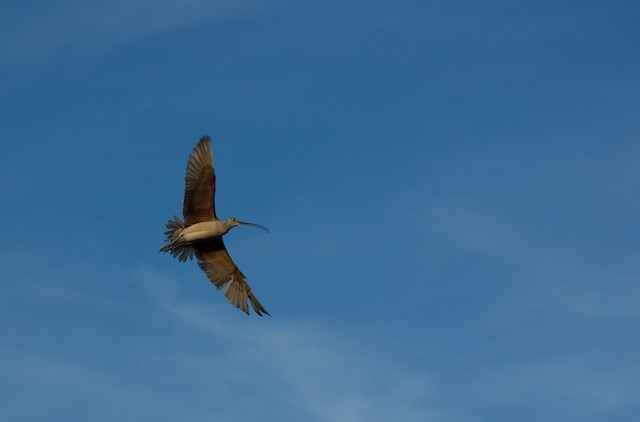
The birds. The meadows of Flat Ranch offer perfect habitat for nesting birds, including sandhill cranes and long-billed curlews (pictured above). The whistling wings of snipe can often be heard in the evening, and ospreys and bald eagles hunt along the streambanks. Bring your binoculars and explore on your own, or join one of our birding groups later in the summer.

The blooms. Flat Ranch is carpeted with spectacular wildflowers in the summer, with mule-s ear, camas, sego lily and many others stretching out across the flat. It's a stunning sight. Bring your camera.

The fish. The Henry's Lake Outlet holds native Yellowstone cutthroat trout, and the Conservancy is working with partners to improve conditions for these fish. Fly fishing is permitted on the preserve. While fishing is highly dependent on water levels, it can be excellent early in the year. You may even catch one like this one that was captured during an electro-shocking survey on the preserve last year.


The kids. Throughout the summer, Flat Ranch hosts educational programs every Wednesday and most Saturdays. (A full schedule will be posted on this blog soon). Most of these programs are perfect for kids, offering the chance to meet hawks and Karelian bear dogs, look through telescopes or identify water bugs. The spotting scope is always set up for close-up views of pronghorns and cranes, and the preserve is a perfect place to wander around and explore.


The conservation. The Conservancy is working at Flat Ranch to demonstrate how a cattle ranch and wildlife habitat can coexist. Our restoration program is improving stream conditions for fish, waterfowl and other wildlife. And around the area, we're working with ranchers to protect their lands, benefiting the rural economy and Yellowstone's migrating wildlife. Stop by and see how your membership in The Nature Conservancy is making a difference in the Henry's Lake area, creating a hopeful future for people and nature.

We hope to see you at Flat Ranch this summer!

Tuesday, May 31, 2011

High Waters


Around Idaho (and many other parts of the country), it's been a cool, wet spring. That means many streams and rivers are raging torrents right now.

Boundary Creek (pictured above), on the border of Idaho and Canada, looks typical of many streams right: frothing whitewater raging past rocks and boulders.


For most Idahoans, this is a welcome sight. To be sure, there can be flooding in some areas. However, most recognize ample water as essential for Idaho's agriculture, hydropower, outdoor recreation and wildlife. High waters mean wetlands (like Ball Creek Ranch Preserve, above) are full and attracting nesting waterfowl. And a raging creek is much preferred to drought.

That's not the case everywhere. Along the Mississippi, from Missouri to Louisiana, is experiencing record floods this year--causing suffering and intense damage to communities and farms.

What's going on here? And what can we do about it? The Nature Conservancy's Jeff Opperman offers the fundamentals on flood science in a special feature on this week's nature.org.


Monday, May 23, 2011

Silver Creek Preserve Opens 35th season

For anglers, it's always a special day: The fly fishing opener at Silver Creek, always the Saturday of Memorial Day weekend.

This year it's extra special: It marks the start of a summer of celebration for the preserve's 35th anniversary.

We have a summer of activities planned, including a 35th anniversary gala with inspirational speakers, music, dancing, auction trips and more--set on the beautiful grounds of Heart Rock Ranch (formerly the Diamond Dragon Ranch). Mark your calendar for June 30 and sign up today!

First, though, is this weekend's opening day barbecue. Join us for food and stories at the visitor center from noon to 3 p.m. (or until the food runs out) on Saturday, May 28. And check out our complete summer schedule.

And how will the fishing be this year? It's always hard to know, but if last year is any indication, there should be some real monsters lurking in the depths. Maybe you'll be lucky and catch one like the one Conservancy staffer Mark Davidson caught (pictured below).

We hope to see you at the preserve this summer. We'll be saving a a place for you!

Monday, May 16, 2011

Lava Lake Video


Last week we announced new conservation easements on Lava Lake Land & Livestock lands, protecting 4533 acres in the Pioneer Mountains. Here's a video on The Nature Conservancy's continuing partnership with Lava Lake, including other conservation projects.

Additionally, check out Rocky Barker's blog on the easements and Pioneer Mountains, and this nice Twin Falls Times News piece on the same subject.

Wednesday, May 11, 2011

Sage Grouse Video


Jean Bjerke shares this video she filmed at Dubois Grouse Days, held each April in Dubois, Idaho.

Grouse Days features a visit to the Conservancy's Crooked Creek Preserve, where these grouse were found. This part of the state remains a stronghold for sage grouse. It's great to see so many strutting and puffing. Thanks for sharing, Jean!

Monday, May 09, 2011

Lava Lake Lands Protected


Two conservation easements will protect 4533 acres of ranchlands in the Pioneer Mountains owned by Lava Lake Land & Livestock. The Nature Conservancy will hold the easements.

Conservation easements are legal agreements that ensure traditional uses of the land continue while protecting the property from subdivision.

The two properties protected by easements are located in the West Fork of Fish Creek drainage in the Pioneer Mountains, an area identified as important for wildlife in Idaho’s Comprehensive Wildlife Conservation Strategy. The properties are particularly important for sage grouse populations in the Pioneers, and also provide habitat for pronghorn, elk, mule deer, moose, sage thrasher and rare plants.

Learn more.

Photo by William H. Mullins

Friday, May 06, 2011

Women and Water


Women everywhere are stepping up to encourage smarter choices about water. Get inspired by visionary women like Cindy Mann, an Idaho farmer who is saving water with "pivotal" new technology at Silver Creek.

And watch other women discuss their connections to water conservation at nature.org/womenandwater.

Monday, May 02, 2011

Silver Creek: Let the Spring Fun Begin

This year marks Silver Creek Preserve's 35th anniversary. To celebrate, we have a season of fun activities planned, beginning this month. Phone 208-788-7910 to sign up or for more inforamtion. All activities at the preserve are free. We hope to see you at Silver Creek this summer!

May 8, 8:30 am - Mother's Day! Early morning guided birding with visiting Audubon guide Bernie Smith. Meet at the visitors center.

May 19, 6-9 pm - Evening birding with local expert Larry Barnes, meeting at the visitor center.

May 21 - Wood River Land Trust canoe float (contact WRLT for details, 208-788-3947).

May 26 - Picabo Hills hike for wildlife and wildflower viewing. This is a strenuous hike through rugged terrain (no trail). Bring lunch and water.

May 27 - Friends of Silver Creek canoe float (3 pm) and barbecue (5 pm). Have the opportunity to float the creek and scout it before opening day!

May 27 through August 26 - Sam Beebe photographic exhibition and vintage Silver Creek photo exhibit, The Community Library, Ketchum

May 28 - Opening day of trout season! Barbecue (12-3 pm, or until the food runs out) at the visitor center.

Full summer schedule

Save The Date: Silver Creek 35th Anniversary Gala. 6:30 pm Thursday, June 30 at Heart Rock Ranch (formerly Diamond Dragon Ranch). More information


Friday, April 29, 2011

Heart Rock Ranch

This week, landowners Harry and Shirley Hagey, with their conservation partners, shared their conservation plans for Heart Rock Ranch, located in the southern Wood River Valley.

When the Hageys purchased the two properties (formerly the Diamond Dragon and Spring Creek ranches) that make up the ranch in December 2010, they announced their goal of protecting the wildlife habitat, spring creeks and agricultural heritage of the property.

This summer, they begin an ambitious plan to restore creeks and wetlands and to protect important wildlife habitat. Read more about the conservation plan at the ranch.

Heart Rock Ranch's blog will include the latest updates on the project throughout the summer, providing details on projects that benefit wildlife, habitat and clean water in the Wood River Valley.

Friday, April 22, 2011

Moose Encounter

Our new seasonal staff member Jeff Barney had a memorable close encounter at Silver Creek yesterday.

Moose have become a common sight on the preserve. Many visitors at first express surprise, because the surrounding area is so arid. But the moose thrive in the healthy habitat along the spring creek.

Be alert and you may be rewarded with your own sightings. Spring is a great time to be at Silver Creek, with lots of wildlife and very few visitors. Have fun.

Monday, April 18, 2011

Signs of Spring

Some years, spring can seem a long time coming in Idaho. The overcast days seem to linger a bit too long into the season.

Still, already some of spring's natural wonders are apparent:

On a hike into the foothills last week, horned larks were everywhere. These birds are in decline in many grassland areas, but they are still pretty easy to find around Idaho. They're a cool-looking bird, and well worth seeking out. Western meadowlarks were also calling in every direction, but I couldn't find the long-billed curlews yet.

Sandhill cranes have returned to Silver Creek Preserve, as have many other migratory birds. Check wetlands around the state and you'll likely find many duck species, grebes and even swans.

Raptors are very active and can often be seen hunting, building nests and interacting with each other. You can see some amazing bird behavior, particularly around the Snake River Canyon.

Yellow-bellied marmots are out sunning themselves on rocks. This relative of the more-famous groundhog actually is only out and about for a short period each year. Come the summer's heat, and marmots will be back underground--likely until next spring.

Soon, foothills will be painted gold with arrowleaf balsamroot (pictured above), the first of many great wildflower displays around Idaho. (And later in the season, join us at Silver Creek and Flat Ranch Preserve for wildflower walks).

Across the state, wildlife is more active and visible and plants are beginning to bloom. Even if it's a bit gray and overcast, head outside and enjoy our beautiful state.

Thursday, April 14, 2011

Idaho Coalition of Land Trusts

by Susanna Danner, director of protection, The Nature Conservancy in Idaho

A sheep rancher in the Southern Pioneers wants to keep her ranch in the family for her children and grandchildren.

A Wood River Valley fisherman wants to restore the willow and cottonwood forested banks where rainbow trout lurk.

A birder in Council wants to wake up in the dark to sneak up on strutting sage grouse.

A wheat farmer in Swan Valley wants to run an economically-viable farm while encouraging elk and deer to migrate across his property.

A resident of Stanley wants to gaze over the Sawtooth Valley and see unbroken vistas all the way to the mountaintops.

A forester in Bonners Ferry wants to harvest larch trees from a forest that is also a seasonal home to grizzly bears.

A Boise resident wants to walk her dog from her home up into the Boise Foothills while great-horned owls flutter overhead.

A cattle rancher in Challis wants to expand his operation while ensuring that the ranch never gets broken up.

What do all of these people have in common? They can benefit from the land trusts of Idaho. First of all, what is a land trust? Some kind of bank?

Land trusts are private, independent, nonprofit organizations that have joined with landowners to protect private lands in the United States for over 50 years.

There are over 1,600 land trusts operating across the U.S.

In Idaho, twenty land trusts and two local and state government-sponsored programs make up the Idaho Coalition of Land Trusts. The Idaho Coalition of Land Trusts (ICOLT) was created to serve as a unified voice for all land trusts in the state.

ICOLT supports the values that so many Idahoans prize: clean drinking water, local food, plentiful wildlife, places to walk, ride, hunt and fish, and scenery that is unmatched in the Northern Rockies.

The land trusts of Idaho are diverse in size, scope, and mission. Land trusts work in all parts of our state, on everything from potato farms to wolverine habitat. Among other places, land trusts are key members of their communities in Pocatello and McCall, Salmon and Twin Falls, Driggs and Boise. But they all share one thing: a focus on private land conservation.

Land trusts work with private landowners to protect and enhance private lands through voluntary agreements called conservation easements and by assisting landowners with stewardship projects.

Land trusts are not environmental advocacy groups. Land trusts work closely with landowners and a large group of partners that includes county governments, sportsmen, Tribes, state and federal land and wildlife management agencies, local watershed groups and others to protect open lands.

To learn more about Idaho’s land trusts and which ones work near you, visit http://www.idaholandtrusts.org/.

Monday, April 11, 2011

Idaho Feral Hog Redux

After their presence was officially determined last year, feral hogs have become a hot topic in Idaho for conservationists and hunters.

What is the latest status of feral hogs in Idaho?

The hogs are still confined to the Bruneau Valley, where despite hunting and control efforts, they remain in signifant herds. A recent story in the Boise Weekly offers an excellent overview of the hogs and the threats they pose.

Hogs are prolific breeders and extremely intelligent. They seek out inaccesible places where hunters can't reach.

The fear is that they could spread to other parts of the state and become a major pest. In other states, like Texas, they have destroyed wildlife habitat and ranch lands. It is estimated they cost that state about $52 million a year.

The thick cover of the Bruneau Valley will make finding hogs a challenge. Added to this is the fact that much of the land is in private ownership, which can make access to the hogs difficult.

But are feral hogs really going to be a problem for Idaho?

Let's face it: While people don't want them established, they are also fascinated by these animals. After all, they are large mammals that thrive in spite of humanity's best efforts.

Certainly hogs could realistically spread along the Bruneau Valley to the Snake River Valley, causing damage to habitat.

Statewide, it seems hard to believe hogs could escape undetected in the sagebrush; the country is just too open. Idaho's habitat and land use is not the same as in Texas, so it appears unlikely that hogs could ever be as problematic.

Obviously, there needs to be control and preferably eradication of these animals.

Hopefully, the level of interest in these hogs can also extend to other, perhaps less dramatic, invasive species.

Cheatgrass, for instance, may not seem as compelling as herds of wild pigs, but its effects on the Idaho landscape are much more devastating than hogs. Aquatic invasive species like zebra and quagga mussels are still not established in Idaho, and you can keep it that way by cleaning your boat and recreational equipment. By not moving firewood, you can keep our forests free of non-native pests.

These actions may not be as exciting as chasing down hogs. But, in the long run, the smaller pests pose much more dramatic threats to Idaho's wildlife, agriculture and economy.

Monday, April 04, 2011

Green Beer

For Earth Month this year, The Nature Conservancy is celebrating sustainable food--and the eating choices you can make that benefit clean water, clean air and wildlife habitat.

We'll be linking to some of these stories throughout the month, and posting Idaho-related pieces on this blog.

To start, many beer drinkers are now interested in buying brews that are sustainably produced.

In places as diverse as Silver Creek and Bogota, Colombia, it's being demonstrated that beer production depends on clean water.

At Silver Creek, this is resulting in a barley farm that is significantly reducing water use--and helping protect the Silver Creek watershed. Read more.

National Geographic also featured sustainable beer production recently
, including the work at Silver Creek.

So raise a toast to Earth Month, and join us for more tasty (and sustainable) choices throughout April.

Photo by Giuseppe Saitta.

Monday, March 28, 2011

Lava Lake Ranch in late winter

While on a recent trip to Conservancy partner Lava Lake Land & Livestock, staffer Sara Sheehy captured a few late winter shots. We'll have more stories and photos from the ranch in the coming weeks.

Monday, March 21, 2011

Sage Grouse Without Sagebrush

Imagine you just received a burn on your arm—not a serious one, but enough to cause some discomfort. While painful, you’d probably not worry about it too much. Your arm would recover and you’d be fine. If you’re healthy, that is.

If you’re already suffering from an illness, or have a comprised immune system, that simple burn could be enough to threaten your life.

Habitat is the same way. Healthy habitat is able to withstand the normal fluctuations and dramatic events that occur: flood, fire, predators, disease, invasive species.

If the habitat is not healthy, such factors could threaten the entire ecosystem.

Fire is a part of sagebrush habitat. But today, a burn in sagebrush habitat is often like a burn to a person with a comprised immune system.

The fire typically starts a cycle of non-native grasses like cheatgrass, which are prone to fire and cause hotter blazes. These repeated burns harm and eventually eliminate sagebrush habitat.

Sage grouse without sagebrush are like fish without water. The grouse need sagebrush and native plants for every stage of their life cycle.

That’s why The Nature Conservancy is working to keep habitat healthy, so that sagebrush country remains home to grouse and other wildlife—and can better withstand periodic fires.

Your support enables the Conservancy to work in places that still have excellent, healthy sagebrush-steppe habitat—the Pioneer Mountains, the Owyhee Canyonlands and the Crooked Creek area.

We’ve also developed innovative tools to help range managers select the places and methods where conservation can accomplish the most for sagebrush habitat. And we’re restoring areas with degraded habitat.

Your support is critical to these efforts. They’re truly keeping sage grouse (and other wildlife) in the sagebrush.

Image of fire near Silver Creek Preserve, Dayna Gross/TNC. Image of sage grouse, Bob Griffith.

Monday, March 14, 2011

Strutting Sage Grouse


The annual display of sage grouse on their strutting grounds—called leks—is one of the most dramatic wildlife spectacles in Idaho. If you’re willing to get up early, you’ll be rewarded with the sight of male sage grouse popping air sacs on their breasts, puffing and fighting.

Where to catch this great wildlife show?

Here are two upcoming opportunities to enjoy sage grouse on their leks. If you haven’t seen the sage grouse yet, make this your year.

Golden Eagle Audubon Lek Trip – April 2, 2011—The Golden Eagle Audubon Society offers a lek tour every year, leaving from Boise. It visits a sage grouse lek near Weiser. Typically, participants will have excellent views of 15-20 displaying grouse. The expert birders from Golden Eagle continue the trip through grasslands and wetlands, and you can often see many interesting birds, including burrowing owls, long-billed curlews, golden eagles and more. Phone Pam Conley at 208-869-0337 to sign up for this free excursion.

Dubois Grouse Days – April 15 and 16, 2011 - Dubois Grouse Days celebrates the great grouse leks (some of the largest remaining in the West) of eastern Idaho with two days of presentations, great food and visits to leks. One of the tours visits the Conservancy’s Crooked Creek Preserve, where participants should see fifty or more grouse displaying. This year’s speakers include wildlife photographer Paul Bannick, Idaho birder and photographer Kathleen Cameron (who also frequently photographs Silver Creek) and falconer Jack Oar. This is a great event to see sage grouse and support a small, rural Idaho community through wildlife tourism.

Image by Bob Griffith

Friday, March 11, 2011

Thinking Big

How do you do effective conservation on 40 million acres of grasslands across a landscape ten times that size? We don’t know for sure yet, but Carlos Fernandez and his team in the Conservancy’s Patagonian Grasslands office are giving it a shot. To put it in perspective, that’s like taking an area about the size of Idaho, Montana, Wyoming, Colorado, Utah, and the Dakotas combined and setting out to effectively conserve all of say, North Dakota. Did I mention that 80% of the land is in private hands and less than 5% is in public protected areas?

Well first off, Carlos and company have begun by focusing on two out of four grassland ecoregions in Argentina. The Patagonian Steppe and Low Monte ecoregions form what we now call the “Patagonian Grasslands” project area. This cuts it down from 400 million acres to about 220 million acres, around the size of four Idahos. (See graphic)

The map above, designed by Nathan Welch of the Idaho Chapter, shows the size of Idaho compared to our Patagonian Grasslands project as well as the relative position of the 45th parallel in each location. In the Idaho, it’s safe to say we have our hands full with our work. Our 27 employees work hard to implement conservation strategies for sagebrush steppe, forests, and freshwater habitats across Idaho.

The Patagonian Grasslands team has just five permanent staff members. So that’s 1/5 the staff covering 4 times the area. It’s simply not feasible to manage preserves, monitor conservation easements, and do hands-on stewardship projects like we do in Idaho. They’ve got to rely on partners to do much of the on-the-ground work.

The Conservancy’s three strategies for the Patagonia Grasslands are:
1. Sustainable grazing
2. Public protected areas
3. Private lands conservation

Done right, these strategies hold the promise of conserving habitat across millions of grassland acres.

The key to success in implementing these strategies is engaging partners like sheep producers, Argentina’s National Park Service, and Fundacion Neuquen – the country’s first land trust. Established in 2008, the Patagonian Grasslands project is young and ambitious. After spending a month here, I’m convinced they’re on the right track, and I’m optimistic, given time, they’ll be able to answer my opening question.

-- Bas Hargrove, from TNC's Patagonian Grasslands office in Bariloche, Argentina.

Monday, March 07, 2011

Western Idaho Sharptails

Sage grouse command a lot of attention from conservationists (and we have more posts on sage grouse coming up soon). But there is another grouse that has an interesting conservation story in Idaho.

By the 1970s, everyone thought that the Columbian sharp-tailed grouse was lost—forever—from western Idaho.
Like sage grouse, sharp-tailed grouse occupy established dancing grounds where males attract females each year. The birds disappeared from their western Idaho dancing grounds.

In 1977, a Bureau of Land Management manager accidentally discovered a small dancing ground on a private ranch near Midvale. He alerted Alan Sands, then a BLM biologist, of his discovery.

This prompted extensive searching efforts throughout Washington and Adams counties, resulting in the discover of three other dancing grounds, two more of which were on the same ranch.

In the early 1980s, the ranch came up for sale, and Sands sought the Conservancy’s help to acquire it. The Nature Conservancy worked with committed conservationists Tim and Karen Hixon, who donated funds to purchase the 4200-acre ranch, and worked with the BLM to designate 30,000 acres as critical habitat for these grouse.

Several years later, the Conservancy transferred most of the ranch to the BLM through a land exchange, retaining a core 200-acre parcel in the heart of the grouse display grounds.

Fast forward to today. What has changed? How are the grouse doing?

Well, Alan Sands is now an ecologist with The Nature Conservancy. Last year, 110 grouse were counted on the Conservancy’s Hixon Sharptail Project, part of a long-term upward trend (there were less than 25 birds in 1982).

Additionally, grouse have expanded beyond the project, with three new dancing grounds documented last year.

With your support, we’re working to continue to protect habitat and expand the grouse’s range, and to protect other vital bird habitat around Idaho.

Wednesday, March 02, 2011

The Expert


An intrepid explorer, naturalist, and diplomat, Francisco “Perito” Moreno is widely considered the father of conservation in Argentina. Part John Wesley Powell, part Teddy Roosevelt, Moreno’s exploration and vision led to the creation of the first National Park in Argentina.

In Spanish, ‘perito’ means ‘expert’, and Moreno got this nickname from his extensive surveying work along the Andean boundary between Argentina and Chile. Born in Buenos Aires in 1852, Moreno spent much of his twenties and thirties exploring Patagonia. Like Powell, he was an earnest geographer and a passionate student of nature and indigenous peoples. When a boundary dispute with Chile arose around the turn of the 20th Century, Argentina called on Moreno to represent its interests.

Historians credit Moreno with helping Argentina retain more than 10 million acres of land in the negotiations with Chile. In compensation the government gave ‘el Perito’ some 225 square miles of land. He sold most of it and gave the money to charity. In 1903, he donated the remaining 27 square miles (17,280 acres) back to Argentina on the condition that it become a nature preserve. In his donation letter, Moreno cites inspiration from Teddy Roosevelt’s conservation advocacy.

The Argentine government made good on its promise, and in 1922 went one better, creating the nearly 2 million acre Parque Nacional del Sur (National Park of the South). Today it’s called Nahuel Huapi National Park after its iconic lake, and forms the centerpiece of Argentina’s national park system.

Photos, top to bottom. 1. Francisco P. Moreno; 2. Perito and me; 3. Grace enjoying Nahuel Huapi National Park.

-- Bas Hargrove, Week 3 of Coda Fellowship in Argentina.

Monday, February 28, 2011

Silver Creek Summer Fun & More

For 35 years, Silver Creek Preserve has been a conservation success that has only been possible by the support of landowners, guides and outfitters, anglers, birders, community members, our donors and individuals like you.

Join us for a summer-long celebration of the preserve's anniversary, from nature walks to canoe floats to barbecues. Full schedule of summer activities.

And mark your calendars for a special Silver Creek celebration gala at Heart Rock Ranch (formerly Diamond Dragon Ranch) south of Bellevue, on Thursday, June 30. Call Sara Sheehy at 208-788-8988 for details.

Silver Creek Enhancement Plan

The Silver Creek enhancement plan has been completed and is available for review. The plan may be checked out at The Nature Conservancy’s Hailey Office on 116 First Avenue North in Hailey or at the Silver Creek Preserve office. You may also phone the Silver Creek office at 208-788-7910. Or you can download the full plan on-line.

In a prioritized format, the plan highlights places and actions where restoration activities can achieve the most for conservation. It was completed by Ecosystem Sciences in conjunction with The Nature Conservancy. Ecosystem Sciences held public meetings and met with many landowners to gather input through the twelve months they were developing the plan.

“The plan offers a comprehensive view of opportunities for conservation throughout the Silver Creek basin,” says Dayna Gross, Silver Creek Preserve manager. “The strategies for implementing the plan may vary from landowner to landowner but the general concepts are applicable on all reaches of the creek. I think of it as a living document--- one that will change over time as we learn more and begin to implement some of the recommendations. We look forward to discussing the ideas and next steps with all those who care about this watershed."

A lot was learned from reviewing years of research and monitoring information, as well as gathering insights from landowners and other community members. The plan identified sediment inputs via overland flow and increasing water temperatures as the top stressors to the creek. Further protection and enhancement of the tributary streams is recommended to address these stressors through increased shading and sediment filtering.

This spring, the Conservancy, working with landowners, will begin to implement some key projects identified in the plan, including:
• Improving the riparian vegetation buffer width and quality on Stalker and Patton creeks.

• Stabilizing sediments and increasing shading and habitat in Kilpatrick pond by building islands.

• Addressing many of the data gaps identified by the plan including nutrient monitoring, field verification of mapping, and spring source protection options.

A list of funding opportunities and a time line is available for landowners who are interested in investing in an enhancement project on their properties and would like to find matching funding sources.

For more information, phone Dayna Gross at the Silver Creek Preserve office at (208) 788-7910.

Silver Creek in the Statesman
Finally, Silver Creek Preserve was featured in a story by Natalie Bartley in today's Idaho Statesman. Silver Creek remains a popular story topic in Idaho and beyond. It's a special place for people and nature.

We hope you can visit the preserve this year to celebrate its 35th anniversary. We'll be saving a place for you!

Canoeing photo by Giuseppe Saitta.

Tuesday, February 22, 2011

Guanaco Country

It was a busy first week of work at the Conservancy office in Bariloche, Argentina, capped by a trip to the field last Friday. Gustavo Iglesias, TNC’s Director of Protected Areas -- think National Parks -- led a training for office staff in the use of global positioning systems (GPS). That's Gustavo and my colleagues Melissa, Annika, and Valeria (L to R) outside the Bariloche TNC office in the photo to the right.

Our journey east of Bariloche took us past Estancia Fortin Chacabuco, a 12,000 acre ranch owned by Conservancy partners, to a place called Valle Encantado.

On the way, I got my first chance to see guanacos in the wild, and apparently, these guys were unusually curious. As we slowed the Conservancy truck to get a better look at the trio browsing the roadside grasslands, one of them approached us to within about 25 feet.
Guanacos are a major conservation target for the Conservancy’s work in Patagonia. These camel-related creatures once roamed the steppes and grasslands of South America in Chile, Bolivia, Peru and Argentina and numbered more than seven million. After the arrival of Europeans, guanaco populations dropped dramatically due to over-hunting and competition from livestock. Now 95% of the remaining half million wild guanacos live in Argentine Patagonia. By promoting sustainable grazing practices, the Conservancy and its partners hope to maintain the guanaco’s stronghold in Patagonia.

Saludos, Bas Hargrove


Thursday, February 17, 2011

Tweet, Tweet

On this wintery (at least in Boise) Thursday, we have some bird and birding-related links for you to enjoy.

But first, a different kind of tweeting: The Nature Conservancy in Idaho is now on Twitter. Follow us at @Nature_ID.

If you are social media user, please follow us, retweet links and share with friends. Join us for regular conservation news and links, green tips, wildlife factoids and more. It's a great way to get the word out on conservation and green living to younger audiences.

It's another way for you to stay connected to the Conservancy's work in Idaho.

Now, for some bird links:

Protecting sage grouse - Sage grouse will soon be strutting on their leks around southern Idaho. But these birds have been in a long-term decline. Do collaborative projects with landowners offer the best hope. This New York Times piece offers an interesting look at sage grouse programs and the hope they offer for the birds.

Great Backyard Bird Count - You only need fifteen minutes to count. The Great Backyard Bird Count is this weekend (February 18-21). Count the birds you see and record them on-line. The count has a goal of 100,000 lists this year--offering a great look at bird population trends across the country.

For more information on such citizen-science programs, my latest column for Down to Earth Northwest takes a look at "counting for conservation."

California condors lay their first egg of the year at Boise's World Center for Birds of Prey, run by the Peregrine Fund.

Cecil D. Andrus Wildlife Management Area - The Idaho Statesman's Pete Zimowsky has a feature today that covers wildlife watching at the WMA and Hells Canyon area. Large concentrations of bald eagles are apparently quite common at this time of year.

New to birding? Natalie Bartley's recent Statesman column offers local groups that can get you started, as well as excellent places to visit.

It's a great time of year for birders and bird enthusiasts in Idaho. Last evening at dusk, I saw four great horned owls along a short stretch of the Greenbelt. They're really hooting at this time of year. Over the weekend, a large flock of Bohemian waxwings was active in the Barber Pool Conservation Area, and a varied thrush was hanging around my backyard.

Waterfowl species are on the move, and you can see huge flocks on the Snake River and any other open water. Tundra swans are passing through many parts of the state. Raptors are beginning to become very visible along the Snake River canyon. In short, it's the perfect time to grab your binoculars and enjoy Idaho's natural wonders.--Matt Miller

Monday, February 14, 2011

Condor Conservation


I’ve seen three Andean condors in my life: two in the Boise zoo and now one of a pair in the Buenos Aires zoo. (I’m not sure where the condor’s mate was that day.) They’re not the prettiest birds in the world, but they’re among the grandest. With a wing-span topping ten feet and weighing up to twenty-five pounds, the Andean condor is the largest flying bird in the world.

Andean condor population numbers are higher than their California cousins, though they are declining. Conservationists at the Buenos Aires Zoo are partnering with Fundacion BioAndina on a captive breeding program to help rebuild wild populations. Although the condors are doing fairly well in the southern part of the range in Argentina and Chile, many parts of the historic range in Venezuela, Ecuador, Peru and Columbia have been depleted.

Andean condors feed on carrion, spotting carcasses from above while soaring on updrafts in the cordillera. One of the major threats stems from the misconception that condors are hunters. Although revered by some people, others kill the huge birds, afraid that they will prey on livestock. In addition to augmenting wild populations of the condors, the conservation partners are working to dispel myths about condor predation. If I’m lucky, I may see one of these giants of the sky during my stay in Patagonia.
--Bas Hargrove

Friday, February 11, 2011

Urban Ecology

Walking through the Parque 3 de Febrero in Buenos Aires, I came upon an old acquaintance. There it was, by the side of the path in a hardscrabble patch of dirt. The scourge of cyclists everywhere. Puncturevine.
I can't count all the flats I've changed due to this invasive species. Puncturevine, or the 'goathead' plant, is on the Idaho noxious weed list that categorizes 64 different harmful, non-native species. Invasive species are one of the greatest threats worldwide to The Nature Conservancy's mission of protecting biodiversity.
As a native of the Old World, it's also an invader in Argentina. Fortunately, puncturevine is not a big threat to our conservation targets in Idaho or Argentina. All the same, this was a surprise encounter I could've done without.
-- Bas Hargrove

Monday, February 07, 2011

Review: An Entirely Synthetic Fish

On Saturday, I hiked up into a rocky gorge with my fly rod, casting in every deep pool I could reach. As with many difficult-to-access streams, the trout were small but hit my attractor flies ferociously--a perfect way to spend a sunny February day.

The trout were obviously rainbows but looked unlike any I had caught previously: They were dark--almost black--with a bright orange-tipped dorsal fin. Beautiful fish. But what were they? Native trout adapted to the volcanic streambed? Hatchery fish stock from afar? Hybrids?

The answer is not easily found, in large part due to reasons described in Anders Halverson's An Entirely Synthetic Fish: How Rainbow Trout Beguiled America and Overran the World.

Halverson documents the global spread of a beautiful wild fish once confined to waters of the American West. It's an amazing and sometimes exasperating story: People believed the best way to improve "rivers" was by stocking them with "better" species like rainbow trout, giving rise to a massive hatchery system that continues to produce trout by the millions to this day.

For years, the stocking of non-native fish was viewed as sound conservation practice--a way to sustain fishing while rivers underwent dramatic changes. Even John Muir supported trout stocking in Sierra Nevada lakes.

Adding to fishery dilemmas was our nation's surprisingly complicated attitudes towards fishing. Early Puritans considered it an idle activity that led to sin and damnation, but later politicians viewed it as a "manly" activity that could keep urban citizens from growing too soft.

Factors like these led to enthusiastic, and "science based" fish stocking, often at the expense of native species. Halverson's most dramatic example was the mass poisoning of all native fish in the upper Green River to make way for an introduction of trout. At the time, this was considered scientifically defensible.

And that, perhaps, suggests the real issue here: that conservation is so often about values more than science, a point Halverson's book makes repeatedly. Even today, the push to remove non-natives and restore native trout rests on a value for native ecosystems more than scientific necessity.

Writes Halverson: "I do believe, though, that those who promote the conservation and restoration of native species should do so with a good understanding of history and a concomitant sense of humility. People have been a part of this world for a long time. There's no going back to the way it was, even if it were possible to define it. Reading through the letters and public pronouncements of the men who were most responsible for spreading nonnative species like rainbow trout throughout the world in the nineteenth century, I have been struck by the similarity of the rhetoric of those who promote native species restoration today. They, too, were sure they were doing the right thing for the world."

Yes. That's it exactly. One hopes that, indeed, humility and conservation history could help inform our many pressing conservation issues today. Halverson's book shows that many societal factors have always informed our values about the natural world--a fact that continues to influence conservation to this day. --Matt Miller