Monday, July 25, 2011

Beat the Heat

With much of southern Idaho in the grips of our usual heat wave, many of us find ways to cope: We head to the mountains, or turn up the air conditioning. We go to the water to swim or float. We try to spend our time outdoors in the late evening or early morning, when it's coolest.

Wild animals, of course, behave in similar ways to "beat the heat." Summer can be a taxing time for many critters.

Just it takes precious calories to stay warm in the winter, it can take calories to stay cool in the summer. Wildlife accomplish this in familiar ways: They seek shade during the heat of the day. They move into the high mountains. They take refuge on (or in) creeks and winters.

Or they go underground.

Many species of ground squirrels in southern Idaho disappear at this time of year. Think about it: Ground squirrels are highly visible in the spring in nearly every patch of sagebrush, farm field and meadow.

And then, they disappear. Poof.

The heat takes too much energy for the squirrels to survive. And so, for some species, they exist in a torpor underground. Their metabolism is lower and they exist in a "deep sleep" for periods of time. For some, they remain underground for eight months of the year.

For instance, take the Columbia ground squirrels so common around Silver Creek. They emerge in mid- to late-April. And then, in early July, they return to their burrows for a very long dormancy. Sometimes they reemerge for a short period in the autumn. Other times they don't re-emerge until April.

It boggles our human notions of time to imagine a species that is dormant for 8 or more months each year of its life.

Yellow-bellied marmots in the cool Idaho Rockies will remain active through the fall. In southern Idaho, many go into dormancy beginning in July.

Ground squirrels of higher elevation mountains--like the Uinta and golden-mantled ground squirrels of Yellowstone National Park--will stay active all summer and won't hibernate until fall.

And so, if you're feeling a bit lethargic in the heat, you can still feel productive compared to ground squirrels: They won't reemerge from their dens until next April!

Wednesday, July 20, 2011

Silver Creek Fishing Report - July 20, 2011


Silver Creek fishing has been tough, but it is improving as warm weather and increased hatches have made for happier fishermen.

Pale morning duns (PMDs) and baetis are still at the top of the menu, which are best fished in the morning or evenings. The trico hatch is on the tip of everyone’s tongues as more are being spotted, but the best of the hatch is still likely a few days away.

Damselflies are out in droves, and their large size makes them a fun option for those of us who like a large fly. Also, don’t forget to bring along a few caddis patterns. Small hoppers, flying ants, and beetles should also be in your fly box, especially during the heat of the day.

If you are looking for a break from the heat, the full moon has had fish feeding through the night, and a mouse pattern is always fun.

Many reports indicate that the fish haven’t been surfacing during the day so dry flies have been ignored, but don’t give up! I have seen great success in recent weeks using minnow streamers and nymphs.

That’s the latest at Silver Creek Preserve. May the inside of your waders stay dry, your fly land true, and happy fishing.

Matthew Hough, Silver Creek Preserve assistant manager

Tuesday, July 19, 2011

Free Leopold Film in Boise, 7/20

Greenfire: The Life and Legacy of Aldo Leopold
Free showing
7 p.m. July 20, 2011
The Flicks, Boise

Tomorrow evening, attend a free showing of Greenfire: The Life and Legacy of Aldo Leopold. It's the first feature-length film on visionary conservationist and author Aldo Leopold (1887-1948).

Watch the trailer.

Leopold is best known as author of a collection of essays, A Sand County Almanac. His words and ideas remain as relevant today as they were when first published soon after his death. Arguably, no one has ever said it better, before or since.

Leopold remains one of the most quotable authors on the land ethic, an idea he coined. Many of his ideas seem notably ahead of his time: He predicted the spread of cheatgrass around the West. He realized the important role large predators play in ecosystems. He recognized people as an integral part of conservation.

Leopold thought deeply about conservation issues, discussed them, read about them and wrote about them. But behind his words was a deep love of the outdoors, of wild things and wild places. His conservation ethic was informed by time on the ground, by hunting and fishing and watching and exploring. Without the personal observation, his words lack context. It's a lesson all conservationists should heed. Being out there still matters.

More importantly, Leopold considered his opinions, and changed them, as so eloquently described in Julianne Lutz Newton's Aldo Leopold's Odyssey. On many issues, Leopold's experience and scholarship led him to strikingly different conclusions than he had espoused earlier in life.

Rather than shrinking in fear of being a "flip flopper," he evolved as a thinker and a conservationist, culminating in A Sand County Almanac. In a time of increasingly strident public debate, of lines in the sand, of name calling and meaningless message points, Leopold continues to remind us that we can only really move forward if , as one of my mentors put it, "we listen at the risk of being changed."

We hope you can join us at the film tomorrow night, co-sponsored by The Nature Conservancy, and learn more about Leopold and his remarkable legacy.

Monday, July 18, 2011

Flat Ranch: Upcoming Events


The Nature Conservancy of Idaho presents:
The 2011 Summer Speaker Series at the Flat Ranch

Wednesday, July 20
Wolverines of the Greater Yellowstone, 7:00 p.m. – 8:00 p.m.

Wolverine expert Bob Inman of the Wildlife Conservation Society recently conducted a camera trap study on the rarest carnivore in North America. While most of us won't see a wolverine firsthand, you'll have the opportunity to view images of local wolverines and learn more about the challenges to studying and conserving these scrappy carnivores.

Friday, July 22 – Saturday, July 23
Nature Art Expo, 10:00 a.m. – 5:00 p.m.

The Nature Conservancy and the Idaho Art Lab present the 2011 Nature Art Expo. Stop by the Flat Ranch during Pioneer Days Antiques Weekend and browse the works of local artists on the porch of the Visitor Center. Artists from southeast Idaho will display and sell original artwork with nature themes for two full days at the Flat Ranch. Light refreshments provided by local businesses.

Saturday, July 23
Geological & Pioneer History of Southeast Idaho, 7:00 p.m. – 8:00 p.m.

BYU-Idaho history expert Professor Larry Coates will provide an overview of the geological history of southeast Idaho and how unique landscape features impacted pioneer settlement of the region.

Wednesday, July 27
Working Dogs for Conservation, 7:00 p.m. – 8:00 p.m.

Come meet the dogs who are doing their part to study rare and endangered species in some of the wildest habitat on the planet, from Hawaii to China to Montana. Trainer Meghan Parks will describe the research with which these dogs assist, as well as conduct a live scent detection demonstration. Great for adults and kids, alike!

Saturday, July 30
Landscape Photography with High Dynamic Range, 7:00 p.m. – 8:00 p.m.

Can't get the sun and the shadows into the same shot? Photos of landscapes seem more dull than when you were there? In this talk and demonstration, Dave Katsuki will show you how to use your DSLR to create more dramatic landscapes using HDR technology and software. HDR is a technique that many serious photographers are using to enhance their images. It combines multiple shots at differing exposures into a single image that can be as realistic or surreal as desired.

Saturday, August 6
Raptors of Yellowstone, 7:00 p.m. – 8:00 p.m.

Come to the Flat Ranch to meet our resident hawks, owls, falcons and eagles. The Grizzly and Wolf Discovery Center will bring live raptors for a talk on diurnal and nocturnal birds of prey of the Greater Yellowstone Ecosystem. Great for adults and kids, alike!

Friday, July 15, 2011

Farm & Biodiversity Tour

By Dayna Gross, Silver Creek Preserve manager

On June 23, Oregon State University held a farms and biodiversity tour in southcentral Idaho, including visits to Ernie’s Organic Farm near Shoshone and the showcase barley farm on the Stevenson property in the Silver Creek valley.

The stated purpose of the tour was to “see first-hand the progressive biodiversity enhancement practices that are driving sustainable agriculture forward in the 21st century and to interact directly with scientists, farmers and professionals who are helping us understand the role and importance of on-farm biodiversity for crop quality, yield and pesticide use reduction.”

We talked about a variety of farming practices and how they affect local biodiversity. Subjects included: integrated pest management, no till farming, cover crops, wetland protection, conservation easements, wildlife, restoration, native plants, beneficial insects and pollinators, soil, organic farming, water conservation, incentive programs for farmers, and the opportunities and constraints involved with all of the above.


We started the tour winding along the Little Wood River on Ernie’s Organics, a farm owned by Fred and Judy Bross, and then headed to the Stevenson property.

On both farms, the substantial riparian areas provide habitat for a variety of animals and the buffers along the agricultural fields are home to an abundance of beneficial insects and pollinators.

The biggest revelation of the day came to me as we looked for insects within the buffer zones on the Brossy property. Because of my background and experience, I have been thinking of landscapes primarily as wildlife corridors and water systems—but there are ecosystems within the landscape that are just as important.


What looks like unused transition ground around agricultural fields can be important habitat for insects, many of which contribute to healthier crops.

For instance, the beetles that I collect with my sons (photo above) as we go for walks thrive in the native habitat along the road and move into the farm ground at night where they eat pests.

If buffer zones of native and flowering plants are close enough to crops, they reduce the need for herbicides and increase the resilience of the crop.

Similarly, pollinators are important for sustaining all kinds of natural systems as well as many of the crops we grow. I often promote riparian buffer zones as great wildlife habitat and important features for water quality and quantity (which they are). But they have been simultaneously providing important habitat for all kinds of little critters that make farming more productive, healthy, and sustainable.

Amazing what you learn when you start looking really, really, closely!

For more information on insects and their role in healthy farms and healthy habitat, contact Gwendolyne Ellen or the Xerces Society.

Wednesday, July 13, 2011

Flat Ranch: The Cows Arrive


Story and photos by Dave Katsuki, additional photos by Sarah Grigg and Nancy Elkins

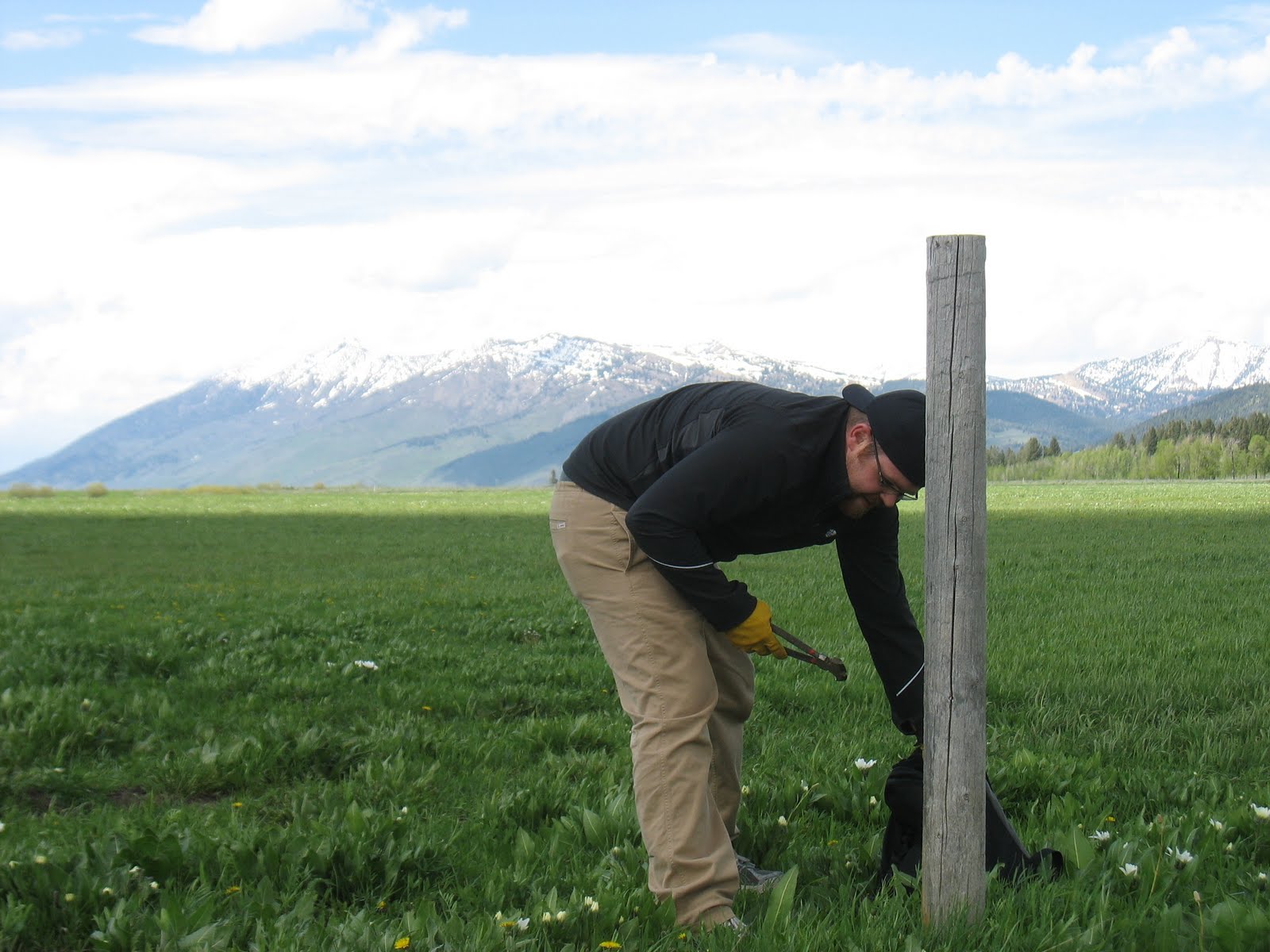
The Flat Ranch is a working cattle ranch, and working cattle ranches have fences--lots of them! Getting the ranch ready for its summer season means getting all those fences ready for the cattle that arrive in July.

In this part of the country, heavy winter snow dictates that most barbed wire and electric fences are “lay-down fences,” built to allow the wire and sometimes movable posts (called “dancers”) to lay down on the ground in the autumn so that they won’t get broken by the weight of the snow.

As the ranch wakes up in the spring, the cowboys, staff and volunteers check the fence lines, put the fences up and make any needed repairs (and there are always needed repairs).
Luckily the cowboys do most of the fencing, and they have done it for many years, but for the new staff and volunteers, there is often a learning curve: Learning to handle barbed wire and using the fence stretcher. Repairing lay-down gates. Grafting new wire onto tired old wire (have to stretch the dollars as well as the wire). Repairing and lighting up electric fences. Replacing rails in old jack fences.

But the hard work is all worth it if one can look out over the fields covered with wild flowers, surrounded by the mountains.

And then the cattle arrive! On July 6, six trucks from Spring Eagle Ranch arrived and unloaded 240 cattle into the corral.

Cowboys sorted the cattle and branded a dozen calves to get ready to drive the herd out to their first pasture. The cowboys were really talented, and their horses seemed telepathic, as the cowboys cut the cows out and roped the calves for branding and vaccinating. It feels like a private rodeo!

The next day, the cowboys drove the cattle to their first pasture, where they will remain for a week. The cattle look pretty happy after a winter down in the desert!

One of the missions of the Flat Ranch is to show that cattle ranching is compatible with conservation.

The cattle graze in 12 different pastures, with an intensive grazing rotation that moves from pasture to pasture on a 2 to 10 day schedule. This prevents over-grazing and mimics the feeding patterns of bison on the grasslands.
A Big Thanks to All Our Volunteers
Dr. Nick Markin and Dr.-to-be Kara Markin, of Omaha, Nebraska stopped by the Flat Ranch for a visit and were recruited as fencing volunteers (see photos above). With the arrival of cattle, electric fencing is erected around creeks to protect banks and streams. The Markins were essential in stringing the fence in time for the arrival of the cattle.

Our volunteers support the ranch in many ways other than fence repair.

Idaho Fish & Game Master Naturalist volunteers have also been tremendously helpful. Penny Freppon acted as visitor center docent for an afternoon, allowing Flat Ranch staff to conduct work in the field. Nancy Olson, Phyllis King, and Lee King undertook a major trash pick-up along the pastures lining Highway 20, hauling off an entire truck-load of debris. Many thanks to all our volunteers who give their time to keep the ranch running!

Wednesday, July 06, 2011

Fishing, Flowers and Fun on the Flats

Blog and photos by Nature Conservancy volunteers Nancy Elkins and Dave Katsuki.

Fly fishers have discovered that Henry’s Outlet on the Flat Ranch is one of the best fishing spots at this time of the year. With the rapid snow run-off muddying the surrounding lakes and streams, the outlet is providing clear and easy moving waters for excellent fishing.

Local fishing guides are bringing clients to the Flat Ranch to fish the outlet, and the results speak for themselves. Here are just a few comments written in the Flat Ranch guest book about the fishing, as well as the experience:

“Lovely, gorgeous, beautiful””
“Absolutely spectacular! Fish, flowers and sand hill cranes. Terrific investment!!!”
“12-inch rainbow, incredible place!”
“Two beautiful cutthroat. Marvelous, wonderful walk”
“19.5 inch cutt. Thanks!”
“4 cutts on lead-free conehead bugger on a 40+ year old UL spin rod”


And that’s just a small sample of the great comments in our guest book.

One thing that is making the ranch so lovely and beautiful are the fields of wildflowers. Carpets of mule’s ear, larkspur and camas frame the setting of the snowcapped mountains. Peeking their heads out from the fields are also sticky geranium, prairie smoke and mouse-ear chickweed. Many visitors have stopped by just to walk in the fields and take photographs.

The 2011 summer speaker series started with a roar on June 15th with a standing-room only talk about cougars by Marilyn Cuthill of Craighead Beringia South. The fun continued the following week with fantastic photos of fly fishing in international locations like Kashmir, Cuba and the Amazon, presented by Jim Klug of Yellowdog Flyfishing Adventures.

If you’ve ever been nervous about how to use your bear spray, the folks at the “bear aware” lecture, led by Leisja Meates of IDFG/USFS, had some hands-on time with water-based practice bear spray. It was quite a sight with everyone lined up in the yard, shooting off their bear spray.


The speaker series runs throughout the summer on most Wednesdays and Saturdays. More fun will take place on Friday July 22nd and Saturday, July 23rd when the Flat Ranch will host a Nature Art Expo in conjunction with the Idaho Art Lab. Local artists will feature their nature-related art for sale.

As you can see, lots of things are happening at the Flat Ranch in Island Park. Whether you are into fishing, flowers, fun, hiking, birding or relaxing, you can experience it all at the ranch.


Tuesday, July 05, 2011

Silver Creek Fishing Report - July 5, 2011


Silver Creek intern Matt Hough submits the latest fishing report from Silver Creek. It sounds like things are finally picking up...

The latest reports at Silver Creek show warming and stabilizing weather to finally be improving fishing conditions on the preserve. As many of you know, our cool, wet weather has made fishing difficult and hatches late since season’s open.

Currently, pale morning duns (PMDs) and baetis are increasing in numbers, and reports indicate that they are about the only flies being used consistently on the preserve in a season marked by very inconsistent hatches.

For those of you that are (like me) and have trouble actually seeing a baetis fly in the water, try fishing them behind a PMD and (maybe) double your odds.

Fishing small, wet flies such as damsel nymphs and midges are also said to work when dry flies are ignored. Anglers have also mentioned sightings of a few green drakes, caddisflies, and stoneflies.

Unfortunately, the brown drakes are completely finished, but it was fun while it lasted. As always, the odds of success are increased with longer leaders (up to 12 feet) and finer tippet (6X to 7X).

Also, don’t underestimate the draw of terrestrials. Flying black ants and black beetles, along with a few bees, are said to have some success, especially during the midday lull.

I also spotted a couple of grasshoppers near the stream last weekend so hoppers may already be on the menu.

Nighttime fishing is thought to improve as the changing moon phases brighten the night. Night fishing is best enjoyed by fishing a mouse pattern near the edges to coax the behemoths out of their hiding spots.

That’s the latest at Silver Creek Preserve. For more specific fly patterns, consult with some of the knowledgeable staff of our local fly shops. Good luck to you and happy angling.

Matt Hough, July 5th, 2011

Friday, July 01, 2011

Best of all he loved the fall

Best of all he loved the fall
The leaves yellow on the cottonwoods
Leaves floating on the trout streams
And above the hills
The high blue windless skies
Now he will be a part of them forever.

Ernest Hemingway
July 21, 1899 - July 2, 1961

Monday, June 27, 2011

Big Week

The Nature Conservancy celebrates the 35th anniversary of Silver Creek Preserve this week with a gala on Thursday, June 30 at Heart Rock Ranch. You can still purchase tickets by phone at 208-788-8988.

Silver Creek has been a tremendous success due to the support of landowners, outfitters, guides, anglers, birders, volunteers, community members and people like you. This is your week. We hope you can join us in the celebration.

Spencer Beebe, one the key Conservancy figures in the acquisition of Silver Creek, will be speaking at the gala event. He'll also be speaking on his book, Cache, at 6 pm Wednesday, June 29 at the Community Library in Ketchum.

His book is described as a forty-year adventure inventing new ways of both conserving the environment and creating new businesses, working with remarkable people, and ultimately finding a new model of development to address the social, economic, and ecological issues of our day.

Conservancy lead scientist M. Sanjayan and the Conservancy's Idaho state director, Laura Hubbard, will also be speaking at the event, which features a silent trip auction, music, dancing and more.

Summer is always a busy time for the Conservancy, with many active projects. Look for stories on many of these activities on this blog soon, including a recap of the gala, a report on the showcase barley farm tour, reflections on Ernest Hemingway, journeys to the Owyhees and much more.

And we hope to see you afield this summer; we're saving a place for you!


Friday, June 24, 2011

Flat Ranch Welcomes Summer Volunteers & Intern

Submitted by Sarah Grigg, Flat Ranch Preserve manager

The 1650-acre Flat Ranch requires some serious up-keep to meet its habitat preservation, grazing, and outreach/education goals. The maintenance of the visitor center and the completion of sundry ranch projects depend upon the commitment of a few individuals with a passion for conservation.

For the next three months, Nancy Elkins and Dave Katsuki—full-time RV road warriors who have covered North America from New Mexico to North Carolina—will contribute 32 hours weekly to keep the visitor center fully functioning and ready to welcome Flat Ranch guests. Nancy formerly worked in marketing and public relations, starting off as a clown, making her way to the Arizona State Lottery, and eventually working as a tour guide in Alaska. She no longer does animal balloon tricks, but she is still “the hostess with the most-est” when it comes to greeting visitors and keeping the visitor center in order.

Dave previously worked as the vice president of engineering for several software companies, and we suspect he might have been a plumber-electrician-carpenter on the side, as he’s repaired our hose and heating systems, as well as jack fences. We can’t wait to see what he’ll fix or improve next.

Intern Laura Yungmeyer recently graduated from Washington and Lee University with degrees in Political Science and Art History. She is the recipient of the A. Paul Knight Memorial Scholarship in Conservation, and will spend the next three months assisting with event planning, fence repairs, willow plantings, keeping the cattle out of the river, and whatever else the wind blows this way.

Having spent two summers as a trail camp cook in Wyoming, she’s not afraid of the challenges that come with working in the "Wild West." With a curious mind, lots of initiative, and a willingness to learn to use various drill bits, we know she’ll be a great help to the Flat Ranch.

Stop by the Flat Ranch soon to meet these outstanding individuals!

Tuesday, June 21, 2011

Brown Drake are Hatching


The brown drake hatch is on at Silver Creek: Catch it if you can.

Brown drakes are large mayflies, and they hatch in astounding numbers downstream of the preserve, in the Point of Rocks area. (The photo above is of a mass of brown drake mayflies floating down the creek).

The drakes all hatch in a period of a few days, mate and then die. The winged adults do not even have mouths, so short is their lifespan.

The hatch brings thousands of feeding trout to the surface, offering what is arguably the best fly fishing of the year on Silver Creek. A variety of birds will also be around feasting on mayflies.

As hatches go, it's one of the best: the sheer number and size of the mayflies makes this one of fishing's best spectacles.

But it's hard to predict: Unlike many hatches, you never know when exactly the drakes might appear. Early June is often a good bet, but as with this year, you never know.

I've spent plenty of time "waiting for brown drake"--an experience that often uncannily resembles the play Waiting for Godot.

Of course, it's nice to think you can always just rush off and catch the hatch when you hear it's happening. It's always a fun idea that, this year, you'll drop everything for a night or two of unbelievable fishing.

In reality, life and its many obligations too often interfere with fishing dreams.

But: the drakes are hatching. The fishing is great. If you can go, now is the time.

Wednesday, June 15, 2011

Henry's Lake Ranches & Wildlife


Recently, we've covered some upcoming events at Flat Ranch Preserve--and hope you can visit us at this beautiful place near Yellowstone this summer.Flat Ranch is only one small part of our work at Henry's Lake.

We're also working with area ranchers to keep them on the land, and to protect wildlife habitat for the well-known critters that move from Yellowstone through Henry's Lake to other public lands each year, escaping the inhospitable conditions of winter in the national park.

The above video, excerpted from a film called Out of Yellowstone, tells the brief story of one rancher on Henry's Lake. Dennis Moedl's Meadow Vue Ranch is not only important for wildlife, it also hosts kids each summer for a summer camp.

And on some summer evenings, you can visit the ranch for a local rodeo and delicious barbecue.

Your support of The Nature Conservancy keeps ranchers on the land and wildlife on the move. Visit Henry's Lake this summer to see how your investment is paying off.

Tuesday, June 14, 2011

2011 Summer Series at Flat Ranch

Free Flat Ranch Summer Series Begins Wednesday!

Wednesday, June 15
Living in Cougar Country, 7:00 p.m. – 8:00 p.m.

While bears and wolves often take center stage as charismatic carnivores in the Island Park area, mountain lions also inhabit the landscape. Learn about the life history of these elusive cats, as well as living and recreating in cougar country. Marilyn Cuthill, Leader of the Teton Cougar Project for Craighead Beringia South (Kelly, WY), will present.

Wednesday, June 22
Fly Fishing Off the Grid, 7:00 p.m. – 8:00 p.m.

It's hard to imagine that anyone would care to fish beyond the banks of the Henry's Fork, but a world of opportunity awaits the adventurous angler, from hunting for tigerfish in Tanzania to fishing peacock bass in the Amazon to chasing trout on the Pakistani border. Jim Klug, founder and co-owner of Yellow Dog Flyfishing Adventures, based in Bozeman, Montana, will describe some of his "more interesting" fishing adventures abroad, share stories, and show photographs from his years of traveling the world. He will also discuss the role that fly fishing has played and can play in local economies and conservation efforts in developed and developing countries. Klug's program will visit such unique and unusual fisheries as Tanzania, Cuba, the Seychelles, India, and Brazil.

Saturday, June 25
Recreating in Bear Country, 5:00 p.m. – 6:00 p.m.

Prepare yourself for recreating in Bear Country before you hit the trail. Join IDFG/USFS bear education technician Licia Meates for a review of the basics, including a hands-on bear spray demonstration. Wear appropriate foot attire for walking outside, and bring insect repellent.

Wednesday, June 29
Wildflowers of the Caldera, 5:00 p.m. – 6:00 p.m.

The Island Park area boasts some of the most spectacular wildflower viewing in the country. Join USFS Forest Botanist Rose Lehman in an outdoor lecture to identify species growing in your own backyard. Wear appropriate foot attire for walking outside, and bring insect repellent.

The Nature Conservancy's Summer Series presentations are free to the public and are held at the Flat Ranch Visitor Center, located on north Highway 20 in Island Park (near Macks Inn), just 15 minutes west of West Yellowstone.

Monday, June 13, 2011

Tour the Showcase Barley Farm

This time of year, the Conservancy's "field season" is in full swing, and our staff are at working hard at various projects around the state. It's also the time of year when you have plenty of opportunities to see what's happening at Conservancy projects.

It's a busy month, and we'll be sharing opportunities here. To get things started, you can now sign up for a tour of the showcase barley farm at Silver Creek, owned by John and Elizabeth Stevenson.

The tour is Thursday, June 23 and also include Ernie's Organics near Shoshone.

The tour is free and includes lunch at Silver Creek Preserve.

The showcase barley farm, funded by Miller-Coors, demonstrates conservation practices including retrofitting irrigation pivots to save water (up to 400,000 gallons per two-day irrigation cycle), establishing stream buffers and improving streamside habitat.

The farm is owned by John and Elizabeth Stevenson, who have been active conservationists in the Silver Creek Valley for decades. Twenty-eight years ago, they donated the first conservation easement in the Silver Creek watershed. Since then, 21 other landowners have donated easements, protecting nearly the entire valley from development. The tour will allow attendees to see the latest conservation methods that enhance wildlife habitat while keeping their barley and alfalfa farm productive.

The tour will also visit Ernie’s Organics, an organic farm owned by Fred and Judy Brossy of Shoshone. The Brossys have also protected their farm with a conservation easement through the Wood River Land Trust. They are well known for their conservation practices and land ethic.

Event details: The tour will last from 9 a.m. to 6 p.m. Thursday, June 23. A bus will leave from Twin Falls at 9 a.m. The tour visits Ernie’s Organics followed by the Stevenson Family Farm.

To register: Email Marsh Holt-Kingsley at marsha.holt-kingsley@oregonmetro.gov or phone Gwendolyn Ellen at (541) 737-6272.

Event sponsors: Oregon State University, National Center for Appropriate Technology, Portland Metro, The Nature Conservancy, the Northwest Center for Alternatives to Pesticides, USDA NRCS Plant Materials Center, USDA Western Region IPM Center Functional Agro-Biodiversity Work Group, Xerces Society for Invertebrate Conservation.


Thursday, June 09, 2011

Flat Ranch: Curlew Paradise!

Submitted by Chris Little, East Idaho land steward

Great news from Flat Ranch Preserve!

Last we conducted a pre-nesting curlew survey on Flat Ranch with biologist Rob Cavallaro of the Idaho Department of Fish and Game.

The survey involved three transects, each containing 5 to 9 survey points. Teams of two walked each transect, stopping at survey points for 5 minutes to record individual curlews, either by visual or auditory confirmation.

In the end, the survey recorded 95 curlews.

According to Rob, these preliminary findings suggest that Flat Ranch may have the highest density of nesting curlews in the country!

We will be conducting a second survey in several weeks when adults are brooding chicks - I will make sure to report again following this.

Big thanks to Nathan Welch, Chet Work, Sarah Grigg, and Rob Cavallaro for making this happen. Be sure to visit Flat Ranch this summer; the curlews are waiting!

Monday, June 06, 2011

5 Reasons to Visit Flat Ranch This Summer

The Nature Conservancy's Flat Ranch Preserve is located right off Highway 20 near Macks Inn, just 15 minutes west of West Yellowstone. It makes a perfect day trip from eastern Idaho, or a great stop en route to Yellowstone.

Admission is free, and our staff and volunteers love to meet visitors who stop by. Still need convincing? Here are five reasons to stop by Flat Ranch Preserve this summer:
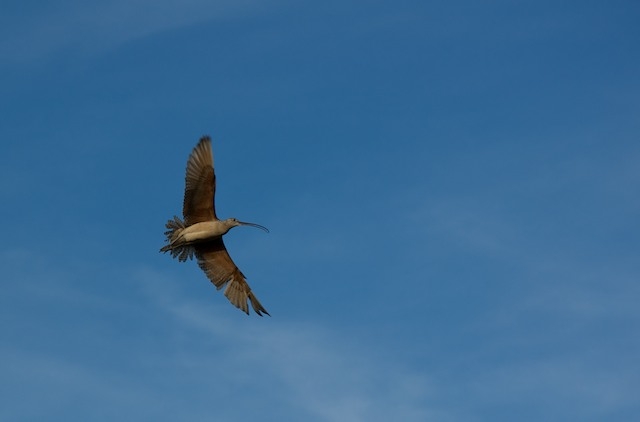
The birds. The meadows of Flat Ranch offer perfect habitat for nesting birds, including sandhill cranes and long-billed curlews (pictured above). The whistling wings of snipe can often be heard in the evening, and ospreys and bald eagles hunt along the streambanks. Bring your binoculars and explore on your own, or join one of our birding groups later in the summer.

The blooms. Flat Ranch is carpeted with spectacular wildflowers in the summer, with mule-s ear, camas, sego lily and many others stretching out across the flat. It's a stunning sight. Bring your camera.

The fish. The Henry's Lake Outlet holds native Yellowstone cutthroat trout, and the Conservancy is working with partners to improve conditions for these fish. Fly fishing is permitted on the preserve. While fishing is highly dependent on water levels, it can be excellent early in the year. You may even catch one like this one that was captured during an electro-shocking survey on the preserve last year.


The kids. Throughout the summer, Flat Ranch hosts educational programs every Wednesday and most Saturdays. (A full schedule will be posted on this blog soon). Most of these programs are perfect for kids, offering the chance to meet hawks and Karelian bear dogs, look through telescopes or identify water bugs. The spotting scope is always set up for close-up views of pronghorns and cranes, and the preserve is a perfect place to wander around and explore.


The conservation. The Conservancy is working at Flat Ranch to demonstrate how a cattle ranch and wildlife habitat can coexist. Our restoration program is improving stream conditions for fish, waterfowl and other wildlife. And around the area, we're working with ranchers to protect their lands, benefiting the rural economy and Yellowstone's migrating wildlife. Stop by and see how your membership in The Nature Conservancy is making a difference in the Henry's Lake area, creating a hopeful future for people and nature.

We hope to see you at Flat Ranch this summer!

Tuesday, May 31, 2011

High Waters


Around Idaho (and many other parts of the country), it's been a cool, wet spring. That means many streams and rivers are raging torrents right now.

Boundary Creek (pictured above), on the border of Idaho and Canada, looks typical of many streams right: frothing whitewater raging past rocks and boulders.


For most Idahoans, this is a welcome sight. To be sure, there can be flooding in some areas. However, most recognize ample water as essential for Idaho's agriculture, hydropower, outdoor recreation and wildlife. High waters mean wetlands (like Ball Creek Ranch Preserve, above) are full and attracting nesting waterfowl. And a raging creek is much preferred to drought.

That's not the case everywhere. Along the Mississippi, from Missouri to Louisiana, is experiencing record floods this year--causing suffering and intense damage to communities and farms.

What's going on here? And what can we do about it? The Nature Conservancy's Jeff Opperman offers the fundamentals on flood science in a special feature on this week's nature.org.


Monday, May 23, 2011

Silver Creek Preserve Opens 35th season

For anglers, it's always a special day: The fly fishing opener at Silver Creek, always the Saturday of Memorial Day weekend.

This year it's extra special: It marks the start of a summer of celebration for the preserve's 35th anniversary.

We have a summer of activities planned, including a 35th anniversary gala with inspirational speakers, music, dancing, auction trips and more--set on the beautiful grounds of Heart Rock Ranch (formerly the Diamond Dragon Ranch). Mark your calendar for June 30 and sign up today!

First, though, is this weekend's opening day barbecue. Join us for food and stories at the visitor center from noon to 3 p.m. (or until the food runs out) on Saturday, May 28. And check out our complete summer schedule.

And how will the fishing be this year? It's always hard to know, but if last year is any indication, there should be some real monsters lurking in the depths. Maybe you'll be lucky and catch one like the one Conservancy staffer Mark Davidson caught (pictured below).

We hope to see you at the preserve this summer. We'll be saving a a place for you!

Monday, May 16, 2011

Lava Lake Video


Last week we announced new conservation easements on Lava Lake Land & Livestock lands, protecting 4533 acres in the Pioneer Mountains. Here's a video on The Nature Conservancy's continuing partnership with Lava Lake, including other conservation projects.

Additionally, check out Rocky Barker's blog on the easements and Pioneer Mountains, and this nice Twin Falls Times News piece on the same subject.