 Elsie Grourke, daughter of Erin and Conservancy staffer Steve Grourke of our Coeur d'Alene office, already has the conservation spirit. Here she shows off just some of the Nature Conservancy's merchandise, available on-line.
Wednesday, March 28, 2007
TNC: The Next Generation
Elsie Grourke, daughter of Erin and Conservancy staffer Steve Grourke of our Coeur d'Alene office, already has the conservation spirit. Here she shows off just some of the Nature Conservancy's merchandise, available on-line.


Thursday, March 22, 2007
Planet Earth airs Sunday

Planet Earth, an 11-part miniseries sponsored by The Nature Conservancy, airs Sunday beginning 7 pm MDT. The series offers a look at the world's habitats through some of the most dramatic wildlife cinematography ever shown; many animal species and animal behaviors are captured on film for the first time.
The series runs through April, with shows themed around habitat types of the world.
Learn more about the habitats and wildlife featured in the series, and tune in to see the wonders of wildlife that still roam Planet Earth:
PLANET EARTH airs on consecutive Sundays from March 25 through April 22, 2007, on Discovery Channel and in high definition on Discovery HD Theater.
POLE TO POLE
Airs Sunday, March 25 at 7 pm MDT
MOUNTAINS
Airs Sunday, March 25 at 8 pm MDT
POLE TO POLE
Airs Sunday, March 25 at 7 pm MDT
MOUNTAINS
Airs Sunday, March 25 at 8 pm MDT
DEEP OCEAN
Airs Sunday, March 25 at 9 pm MDT
DESERTS
Airs Sunday, April 1 at 8 pm MDT
ICE WORLDS
Airs Sunday, April 1 at 9 pm MDT
SHALLOW SEAS
Airs Sunday, April 8 at 8 pm MDT
GREAT PLAINS
Airs Sunday, April 8 at 9 pm MDT
JUNGLES
Airs Sunday April 15 at 8 pm MDT
Airs Sunday, March 25 at 9 pm MDT
DESERTS
Airs Sunday, April 1 at 8 pm MDT
ICE WORLDS
Airs Sunday, April 1 at 9 pm MDT
SHALLOW SEAS
Airs Sunday, April 8 at 8 pm MDT
GREAT PLAINS
Airs Sunday, April 8 at 9 pm MDT
JUNGLES
Airs Sunday April 15 at 8 pm MDT
FRESHWATER
Airs Sunday, April 15 at 9 pm MDT
FORESTS
Airs Sunday, April 22 at 8 pm MDT
CAVES
Airs Sunday, April 22 at 9 pm MDT
Monday, March 19, 2007
Where Did Hemingway Get His Sandals?
This and other questions are being answered as The Nature Conservancy begins a comprehensive archive of all items in the Hemingway House, as reported this week in the Idaho Mountain Express.
The home was built by Bob Topping, a well-known socialite of his day, in 1951. Ernest and Mary Hemingway bought it in 1959, and Mary continued living in the home off and on for 23 years after Ernest's death. The Conservancy were bequeathed the home in Mary Hemingway's will. The home now includes items from all owners, so tracing their history can be a challenge.
But the archive is turning up interesting items, and will serve as a valuable historic record as several Hemingway friends and relatives who knew the house well are still alive.
Marty Peterson, a Hemingway scholar currently working in the Office of the President at the University of Idaho, has played a vital role in assisting with the archiving effort. "The contents of the Hemingway House provide a snapshot of Ernest and Mary Hemingway's lives in Idaho,” he says “Scholars and Hemingway aficionados throughout the world view the house and its contents as an international treasure."
Right now, there are many stories about the house, but some of them are conflicting and often the information has been passed by word of mouth. Peterson has found items in the house that were brought here from Hemingway’s home in Cuba, and also has found items in Cuba with an Idaho connection, including two pronghorn heads Hemingway took in the Pahsimeroi Valley. Peterson will be returning to Cuba this year to seek additional information about the furnishings in Ketchum.
“The documentation will bring alive the real history of this place,” says Hemingway preserve manager Taylor Paslay, who is leading the archive. “With a computer inventory that includes the stories of each object, we will have consistent and accurate information that can be accessed by future staff and scholars.”
The home was built by Bob Topping, a well-known socialite of his day, in 1951. Ernest and Mary Hemingway bought it in 1959, and Mary continued living in the home off and on for 23 years after Ernest's death. The Conservancy were bequeathed the home in Mary Hemingway's will. The home now includes items from all owners, so tracing their history can be a challenge.
But the archive is turning up interesting items, and will serve as a valuable historic record as several Hemingway friends and relatives who knew the house well are still alive.
Marty Peterson, a Hemingway scholar currently working in the Office of the President at the University of Idaho, has played a vital role in assisting with the archiving effort. "The contents of the Hemingway House provide a snapshot of Ernest and Mary Hemingway's lives in Idaho,” he says “Scholars and Hemingway aficionados throughout the world view the house and its contents as an international treasure."
Right now, there are many stories about the house, but some of them are conflicting and often the information has been passed by word of mouth. Peterson has found items in the house that were brought here from Hemingway’s home in Cuba, and also has found items in Cuba with an Idaho connection, including two pronghorn heads Hemingway took in the Pahsimeroi Valley. Peterson will be returning to Cuba this year to seek additional information about the furnishings in Ketchum.
“The documentation will bring alive the real history of this place,” says Hemingway preserve manager Taylor Paslay, who is leading the archive. “With a computer inventory that includes the stories of each object, we will have consistent and accurate information that can be accessed by future staff and scholars.”
Monday, March 12, 2007
On Biological "Hotspots"
 Macaws at a clay lick in Manu Reserve, Peruvian Amazon. Photo by Jennifer Miller
 A focus of many conservation organizations over the past decade has been on "biological hotspots"--those areas that have the highest number of species. A relatively few areas of the Earth contain the vast majority of its species.
Certainly these places are special, but should they be the sole focus of biodiversity conservation?
Peter Kareiva, The Nature Conservancy's chief scientist, argues that the answer to this question should be "no" in a nature.org interview.
In the interview, Kareiva makes the point that some species have more profound impacts on ecosystems than others, such as grizzly bears. Some habitats hold relatively few species--such as northern forests--but still provide great benefits to people in the form of erosion control, water quality and outdoor recreation.
He also believes that humans should not be denied access to the natural world, whether they live near a hotspot or in an area that contains fewer species.
The argument makes sense. Certainly no one is denying the importance of those areas with huge numbers of species, such as the Peruvian Amazon (pictured above), where I visited in 2005. Manu National Park in the Amazon has more bird species, for instance, than the entire United States. And the number of birds pales beside the amazing variety and numbers of insects, to say nothing of the exuberant plant growth in every nook and cranny. The sights, sounds and smells of the Amazon remind one that life is everywhere.
Compared to the Amazon, Idaho's own biological diversity seems, admittedly, puny. But as Kareiva argues, species counts never give the whole picture. Idaho still has some of the best populations of large mammals--moose, elk, mule deer, bighorn sheep, mountain goat, caribou, pronghorn, grizzly bear, mountain lion, wolf and more. The sagebrush country offers some of the best shrublands on the continent, with sage grouse, burrowing owls, golden eagles, badgers, ermines and many more.
The Nature Conservancy's mission focuses on protecting the great variety of native plants and animals around the world, from the species-rich areas like the Amazon to the sagebrush country of Idaho. Only by protecting the full range of these habitats can the Conservancy achieve its mission.
Tuesday, March 06, 2007
Botanical Illustrations


The Nature Conservancy in partnership with the Sawtooth Botanical Gardens is hosting an afternoon of Botanical Illustrations on Saturday, March 10th. This interactive class will be from 3 pm to 5pm. Refreshments and supplies will be provided, compliments of the botanical gardens. Dayna Smith, Silver Creek Preserve Manager and Landscape Architect, will be teaching the course and focusing on fun ways to incorporate botanical illustrations into your life. Pencil and colored pencil will be used and she will focus on adding illustrations to your journaling, as well and make greeting cards and other materials from your drawings. The combination of art and science at its finest!!
Call 788-7910 for details.
Monday, March 05, 2007
The Bear in Winter

Justin Petty, the Conservancy's North Idaho land steward, reports:
This morning I had the opportunity to tag along with the Idaho Department of Fish and Game and Jesse Lewis to retrieve and replace a Global Positioning System (GPS) collar on a 300-pound hibernating black bear. Jesse, who is finishing his thesis work at the University of Idaho, squirmed down into the den with the very-much-awake bear and tranquilized him. The male bear was in fantastic shape and was quite a bit larger than they anticipated, which made removing him from his den "challenging". It was an awesome experience.
The data Jesse is collecting gives us a glimpse into the routines, needs, and potential hazards these bears are faced with. I look forward to seeing the results from the collars removed this season.
 The Conservancy's Justin Petty poses with tranquilized black bear.
Friday, March 02, 2007
Silver Creek Activity Schedule

As the red-winged blackbirds' arrival suggests, spring is indeed just around the corner. And that means another full schedule of activities at Silver Creek Preserve, from bird walks to art lessons, from volunteer opportunities to barbecues.
Check out this season's offerings. And check back frequently, as more activities will be added as throughout the year.
Thursday, February 22, 2007
Is It Spring Yet?

The red-wing blackbirds came back to Silver Creek Preserve this past weekend! The first sign that spring is on its way, no doubt. Like clockwork, the red wing blackbirds come back to the Preserve around Presidents Day weekend and make their presence heard with their distinct and beautiful song.
Silver Creek is a wonderful place to visit this time of the year as the birds start to come back and mate. In March, you can see the sandhill cranes returning as the trumpeter swans leave, waterfowl in their full mating colors, black cap chickadees, bald eagles, gold finches, dark eyed juncos, song sparrows, and marsh wrens, to name a few. Don't forget to look for the Northern Harriers performing their acrobatic mating ritual. This is truly an amazing site.
In April and May, the Preserve comes to life even more with the arrival of: cliff, tree, and barn swallows, yellow headed blackbirds, ruby kinglets, western meadowlarks, vesper sparrows, northern flickers, willow flycatchers, bullocks oriels, yellow warblers, and cedar waxwings, to name a few. See the complete Silver Creek bird list.
Wednesday, February 21, 2007
A Place Salmon Would Die For

The Pahsimeroi River is one of the most important rivers in Idaho for spawning salmon. Read about The Nature Conservancy's conservation efforts in this special valley that benefit people and salmon.
Wednesday, February 14, 2007
Happy Valentine's Day

Send your valentine a gift this year that will show you care while also protecting the Earth's last great places. The Nature Conservancy offers several gift options, including free e-cards and gift memberships.
Looking to buy some flowers? Consider buying organic, from a producer that utilizes ecologically friendly practices and is dedicated to improved farm working conditions.
From all of us at The Nature Conservancy of Idaho, we hope you have a very happy Valentine's Day.
Friday, February 09, 2007
Hemingway Archive Project Begins
The Nature Conservancy has announced the launch of its Hemingway House archival project to document all historical and cultural items in Hemingway’s Ketchum home by mid-summer of this year. The Conservancy has owned the home—Ernest Hemingway’s last—since 1986. The archiving project is the second part of a three-phase effort to restore the home to its condition during Hemingway’s ownership.
The archiving began with a $20,000 donation from Zions Bank earlier this month.
Conservancy staff member Taylor Paslay will lead the inventory, which will begin with photo documentation of all items in the home, filed into a catalog by computer.
“We’re going to photograph and describe everything from furniture to small knick knacks,” says Paslay, who has worked since September 2005 as steward of the preserve, which includes the home and a eleven-acre natural area along the Big Wood River.
Part of the challenge, Paslay says, is determining the historical context for each of the items. There are objects in the home from Bob Topping, the original owner; Ernest and Mary Hemingway; and The Nature Conservancy’s staff, who used the preserve as an office for several years.
To determine the authenticity of various artifacts, Paslay will conduct interviews with people who knew the house the best and some who knew Ernest quite well.
“As with any historical property, the history really becomes more valuable when you have the stories and information from those who actually lived it,” says Paslay. “We have an opportunity here to gather the information on the house from those who knew it best.”
Marty Peterson, a Hemingway scholar currently working in the Office of the President at the University of Idaho, has played a vital role in assisting with the archiving effort. "The contents of the Hemingway House provide a snapshot of Ernest and Mary Hemingway's lives in Idaho,” he says “Scholars and Hemingway aficionados throughout the world view the house and its contents as an international treasure."
Right now, there are many stories about the house, but some of them are conflicting and often the information has been passed by word of mouth. Peterson has found items in the house that were brought here from Hemingway’s home in Cuba, and also has found items in Cuba with an Idaho connection, including two pronghorn heads Hemingway took in the Pahsimeroi Valley. Peterson will be returning to Cuba this year to seek additional information about the furnishings in Ketchum.
“The documentation will bring alive the real history of this place,” says Paslay. “With a computer inventory that includes the stories of each object, we will have consistent and accurate information that can be accessed by future staff and scholars.”
Interviews will be conducted this spring.
The Nature Conservancy recommitted to the Hemingway House in August 2005, when it announced plans to hire a caretaker and restore the home. Last year, as part of the first phase of the restoration, a patio was installed, windows were repaired and the exterior of the home was painted. The plumbing, roof and electricity were also all repaired and are in good working order.
“The Conservancy is about protecting Idaho’s special places for nature and people, not historical preservation” says Laura Hubbard, state director for the Conservancy’s Idaho Chapter. “The Hemingway House was bequeathed to us, and we have a duty to protect the cultural and historical value of one of America’s most beloved literary figures. Our work there is being funded by those with a particular interest in Hemingway, and it is not taking away from our conservation mission.”
The third phase will include a restoration of the home’s indoor elements, including the drapes and carpeting.
“A house naturally shows wear and tear after more than 50 years of use,” says Paslay. “It is our responsibility to ensure that not only the ongoing maintenance of an older home, but also the restoration to ensure that it retains its historical and cultural value. That requires resources, and we’re fortunate that this community values the home.”
Hubbard says that contributions like the one from Zions Bank will ensure that the Conservancy can continue to engage in restoration of the home. “It is great that corporations like Zions are playing a role in preserving the Hemingway legacy in Ketchum,” she said.
Zions Bank spokesperson said that bank officials recognize the Hemingway legacy as an important aspect of the local community. “Since 2005 Zions Bank has had a presence in the Wood River Valley, and we’ve been dedicated to the community and to preserving the arts and the history in the area,” said Wanda Allred, Zions Bank’s Wood River Valley office branch service manager. “Zions is proud to make this donation for the archival project as part of the maintenance and restoration of the Ernest Hemingway home.”
Donations are still welcomed by the Conservancy for the continuation of the project.
Editor's note (September 2012): The Hemingway House no longer has a full-time caretaker. The Conservancy does not offer public tours of the home.
The archiving began with a $20,000 donation from Zions Bank earlier this month.
Conservancy staff member Taylor Paslay will lead the inventory, which will begin with photo documentation of all items in the home, filed into a catalog by computer.
“We’re going to photograph and describe everything from furniture to small knick knacks,” says Paslay, who has worked since September 2005 as steward of the preserve, which includes the home and a eleven-acre natural area along the Big Wood River.
Part of the challenge, Paslay says, is determining the historical context for each of the items. There are objects in the home from Bob Topping, the original owner; Ernest and Mary Hemingway; and The Nature Conservancy’s staff, who used the preserve as an office for several years.
To determine the authenticity of various artifacts, Paslay will conduct interviews with people who knew the house the best and some who knew Ernest quite well.
“As with any historical property, the history really becomes more valuable when you have the stories and information from those who actually lived it,” says Paslay. “We have an opportunity here to gather the information on the house from those who knew it best.”
Marty Peterson, a Hemingway scholar currently working in the Office of the President at the University of Idaho, has played a vital role in assisting with the archiving effort. "The contents of the Hemingway House provide a snapshot of Ernest and Mary Hemingway's lives in Idaho,” he says “Scholars and Hemingway aficionados throughout the world view the house and its contents as an international treasure."
Right now, there are many stories about the house, but some of them are conflicting and often the information has been passed by word of mouth. Peterson has found items in the house that were brought here from Hemingway’s home in Cuba, and also has found items in Cuba with an Idaho connection, including two pronghorn heads Hemingway took in the Pahsimeroi Valley. Peterson will be returning to Cuba this year to seek additional information about the furnishings in Ketchum.
“The documentation will bring alive the real history of this place,” says Paslay. “With a computer inventory that includes the stories of each object, we will have consistent and accurate information that can be accessed by future staff and scholars.”
Interviews will be conducted this spring.
The Nature Conservancy recommitted to the Hemingway House in August 2005, when it announced plans to hire a caretaker and restore the home. Last year, as part of the first phase of the restoration, a patio was installed, windows were repaired and the exterior of the home was painted. The plumbing, roof and electricity were also all repaired and are in good working order.
“The Conservancy is about protecting Idaho’s special places for nature and people, not historical preservation” says Laura Hubbard, state director for the Conservancy’s Idaho Chapter. “The Hemingway House was bequeathed to us, and we have a duty to protect the cultural and historical value of one of America’s most beloved literary figures. Our work there is being funded by those with a particular interest in Hemingway, and it is not taking away from our conservation mission.”
The third phase will include a restoration of the home’s indoor elements, including the drapes and carpeting.
“A house naturally shows wear and tear after more than 50 years of use,” says Paslay. “It is our responsibility to ensure that not only the ongoing maintenance of an older home, but also the restoration to ensure that it retains its historical and cultural value. That requires resources, and we’re fortunate that this community values the home.”
Hubbard says that contributions like the one from Zions Bank will ensure that the Conservancy can continue to engage in restoration of the home. “It is great that corporations like Zions are playing a role in preserving the Hemingway legacy in Ketchum,” she said.
Zions Bank spokesperson said that bank officials recognize the Hemingway legacy as an important aspect of the local community. “Since 2005 Zions Bank has had a presence in the Wood River Valley, and we’ve been dedicated to the community and to preserving the arts and the history in the area,” said Wanda Allred, Zions Bank’s Wood River Valley office branch service manager. “Zions is proud to make this donation for the archival project as part of the maintenance and restoration of the Ernest Hemingway home.”
Donations are still welcomed by the Conservancy for the continuation of the project.
Editor's note (September 2012): The Hemingway House no longer has a full-time caretaker. The Conservancy does not offer public tours of the home.
Wednesday, January 31, 2007
Into Africa
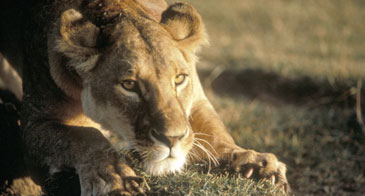
The Nature Conservancy is about to launch its work in Africa, with programs being established in several countries. In this new column, the Conservancy's lead scientist Sanjayan reflects on the fate of a cattle-killing lion in Kenya--and the challenges of private land conservation on this rapidly changing continent.
Thursday, January 25, 2007
Ermine Encounter
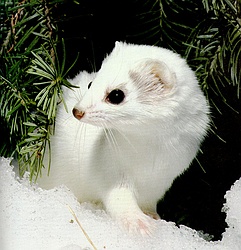
At first glance, it looked surreal, even improbable: A flash of white so pure it made the falling snow appear dirty. The sleek creature flitted through the sagebrush before offering a good look, but suddenly it reappeared only feet away: An ermine.
"Ermine" is the name given to the white phase of the short-tailed weasel. Common throughout North America, weasels are nevertheless difficult to spot. They never exist at high population densities, and rarely reveal themselves to humans. Seeing one in the white winter phase is a rare treat, something I had never seen before.
Short- and long-tailed weasels turn white in latitutdes where they are likely to get snow. This is a genetic trait: Move a southern weasel to Canada and it still remains brown.
While difficult to spot, the ermine is hardly shy around humans. Indeed, this one spent ten minutes circling around my friend and I, often coming within five feet of us for a close inspection. Its silky white coat contrasted with a brilliant black tip on its tail, and two beady black eyes. I suspect it was a "once in a lifetime" sighting.
I spotted this interesting little creature recently was in a wild stretch of land off the Owyhee Backcountry Byway. The area is grazed by cattle but I have rarely seen other visitors to this favorite spot.
At one time, the "sagebrush sea" that covers much of southern Idaho was considered monotonous and barren. But anyone who takes the time to explore sagebrush country knows that it is rich in wildlife. Nearly every visit to the Owyhees brings a new sighting, something unexpected.
That's why The Nature Conservancy is working to protect healthy sagebrush across southern Idaho, including in five-million acre Owyhee County. By working together, we can protect this special place so that future generations can encounter the amazing wild country and interesting wildlife--like the ermine--that is found in the southwestern corner of Idaho.
Wednesday, January 17, 2007
An Ounce of Prevention...
This week, the State of Arizona made a most disturbing announcement: Zebra mussels were found in the state. The zebra mussel may only be as long as a fingernail, but it's impact is huge. The non-native mussel not only crowds out native mussels and hoards nutrients, it also exists at such high densities that it clogs boat motors and water-intake valves on power stations.
In the Great Lakes, mitigating the effects of zebra mussels has cost more than $3 billion. That's why finding them in Arizona is so disturbing. If they spread around Western rivers, they could have massive impacts on hydropower, agriculture, outdoor recreation and wildlife habitat.
Once established, invasive, non-native species are difficult to control. Prevention is a much more cost-effective strategy. Protecting native habitats from new invaders is one of the Conservancy's conservation strategies around the world. This week, the Conservancy's Great Lakes program announced a new partnership to prevent new invasive species from entering the lakes.
In Idaho, the Conservancy is using satellite technology to map pristine areas of Hells Canyon and the Owyhees to protect them from weeds, engaging anglers at Silver Creek to stop the spread of New Zealand mud snails and participating in statewide programs to help educate outdoor enthusiasts on how cleaning their equipment can prevent moving weeds from one locale to another.
Education and preventative measures are not always easy, but they're far less difficult and far less expensive than controlling established invasive species.
In the Great Lakes, mitigating the effects of zebra mussels has cost more than $3 billion. That's why finding them in Arizona is so disturbing. If they spread around Western rivers, they could have massive impacts on hydropower, agriculture, outdoor recreation and wildlife habitat.
Once established, invasive, non-native species are difficult to control. Prevention is a much more cost-effective strategy. Protecting native habitats from new invaders is one of the Conservancy's conservation strategies around the world. This week, the Conservancy's Great Lakes program announced a new partnership to prevent new invasive species from entering the lakes.
In Idaho, the Conservancy is using satellite technology to map pristine areas of Hells Canyon and the Owyhees to protect them from weeds, engaging anglers at Silver Creek to stop the spread of New Zealand mud snails and participating in statewide programs to help educate outdoor enthusiasts on how cleaning their equipment can prevent moving weeds from one locale to another.
Education and preventative measures are not always easy, but they're far less difficult and far less expensive than controlling established invasive species.
Thursday, January 11, 2007
Stalker, or Stocker?
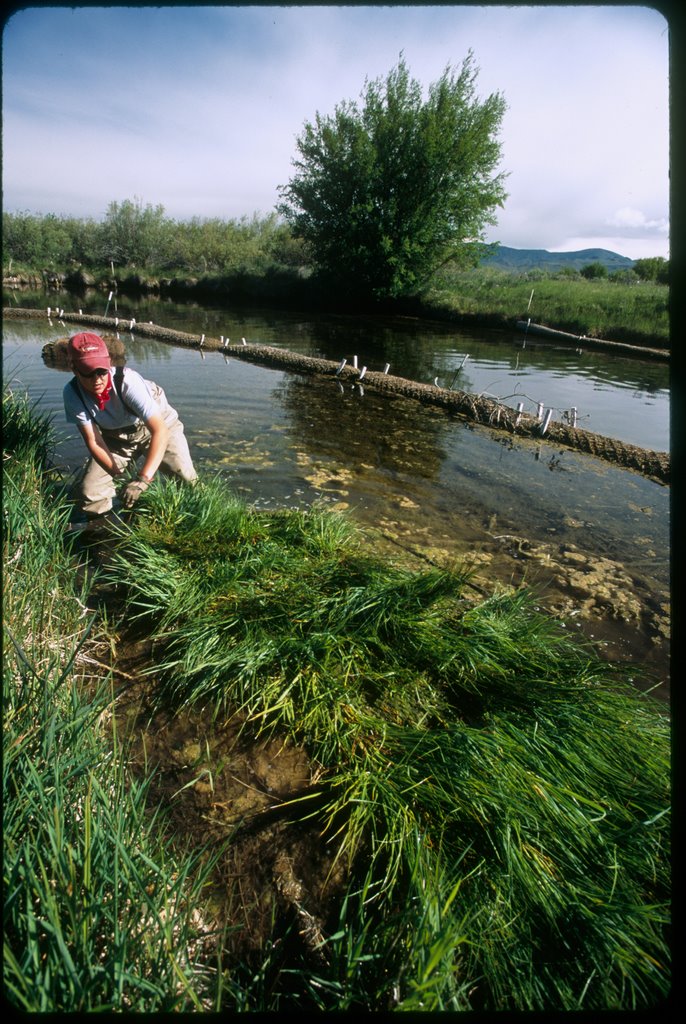 Above: Installation of bio-logs to improve habitat conditions along along St__ker Creek .
What's in a name? Is it Stocker Creek or Stalker Creek? If you are a frequent visitor to Silver Creek Preserve, you know the creek we mean. This tributary stream meets up with Grove Creek on the preserve to form Silver Creek. It is known for its large trout and difficult fishing conditions--and no one can seem to agree on its name.
It's not only the stream: the access road, a Nature Conservancy cabin and a ranch adjacent to the preserve all bear the name Stalker/Stocker. The road--with its sign (Stocker Creek Road)--would seem to solve the issue, but maps and plaques often carry the "Stalker" name.
Over the years, there have been some creative explanations for the name. "Stocker" seems to fit a fishing stream, although all the fish in Silver Creek and its tributaries are wild, not stocked. Some have suggested that "stalker" alludes to the fact that a successful angler on the creek must stalk fish quietly and patiently to be successful. Even a careful angler will put many fish down here.
Alas, a recent look through historical archives has revealed the real source of the name (and the real spelling): The creek was named after an early settler of the area, James Tanch Stalker (1859-1940) who moved to Blaine County sometime in the late 1940's.
So Stalker it is, the road sign nothwithstanding. The names we give places are often full of meaning, and full of memories. Whatever you have called it, make sure you visit Stalker Creek again soon. The improbably huge trout sipping improbably tiny mayflies, the mink darting along the bank, the great blue heron flying to roost at sunset--all are still there, in one of Idaho's most special natural areas.
Tuesday, December 26, 2006
Winter events at Silver Creek Preserve
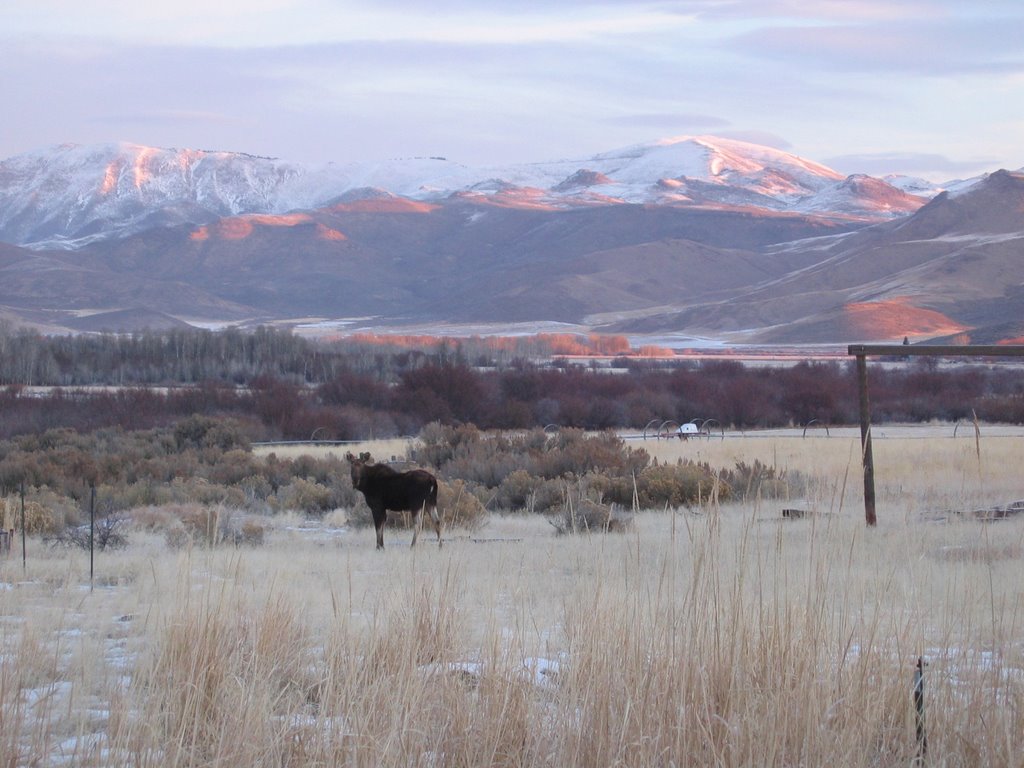
There are several events planned this winter at the Silver Creek Preserve. The following is a list of events organized by the Environmental Resource Center of the Wood River Valley. Silver Creek staff will be helping to lead the tours around the Preserve and there are bound to be great things to see. The winters bustles with activity-- waterfowl, swans, eagles, elk, deer, moose often make appearances-- so put your warm clothes on and come on down.
Birding on Snowshoes
Saturday January 27, Saturday February 24, and Saturday March 31st 10 am- 2 pm
An adventure viewing birds in the Silver Creek area. Carpools meet at the Hailey Park and Ride at the corner of River Street and Bullion st.
Free to ERC members
Donation to ERC requested ($15) for non- members and ($25) for families of 3 or more.
Coming of Spring Walks
Saturdays: 3/3, 3/10, 3/17, 3/24, 10 am- 2 pm
Discover the coming of spring with the ERC on nature walks to Silver Creek Preserve. Watch spring unfold by noticing changes in the abundant flora and fauna. Groups will meet in Hailey at the corner of Bullion st. and River st. at the Park-and-Ride lot.
Free to ERC members
Donation to ERC requested ($15) for non- members and ($25) for families of 3 or more.
Saturday January 27, Saturday February 24, and Saturday March 31st 10 am- 2 pm
An adventure viewing birds in the Silver Creek area. Carpools meet at the Hailey Park and Ride at the corner of River Street and Bullion st.
Free to ERC members
Donation to ERC requested ($15) for non- members and ($25) for families of 3 or more.
Coming of Spring Walks
Saturdays: 3/3, 3/10, 3/17, 3/24, 10 am- 2 pm
Discover the coming of spring with the ERC on nature walks to Silver Creek Preserve. Watch spring unfold by noticing changes in the abundant flora and fauna. Groups will meet in Hailey at the corner of Bullion st. and River st. at the Park-and-Ride lot.
Free to ERC members
Donation to ERC requested ($15) for non- members and ($25) for families of 3 or more.
Tuesday, December 19, 2006
A Gift To Idaho
"Christmas came to Idaho early this year," Governor Jim Risch said yesterday at a press conference in his office. Risch was there to announce Idaho's newest state park, Ritter Island--a gift from The Nature Conservancy to the state.
Ritter Island has been owned and managed by the Conservancy since 1986. Since Idaho Department of Parks and Recreation has a vision
The gift includes a one million dollar endowment for the state to manage its new state park. This money was given in 1986 to the Conservancy and was invested wisely, thus enabling the state to manage the park without straining its budget.
The Conservancy has owned Ritter Island since 1986, and has managed it as Thousand Springs Preserve. The island includes a historic rock house and dairy farm built by businesswoman Minnie Miller in 1920. The facilities remain in excellent condition. The Minnie Miller Falls on the property are the largest intact springs along the Middle Snake River.
The Conservancy’s goal in the Thousand Springs area was to protect the springs and unique wildlife they support. The scenic site has also been a popular recreation area and many visitors have expressed an interest in touring the historic buildings. By donating the property to Idaho to manage as a state park, the Conservancy will ensure the continued protection of the springs and wildlife habitat, while at the same time provide the public with what it wants: more access and interpretive facilities for the history and nature of the island.
“Our work in the Middle Snake River with members and partners is creating a legacy that all Idahoans will be able to enjoy,” says Laura Hubbard, the Conservancy’s Idaho state director. “I thank all of our supporters over the past twenty years who have made this enduring conservation legacy possible. Because of their support and vision, future generations will be able enjoy the natural beauty, unique wildlife and inspiring human history of Ritter Island.”
Read the Idaho Statesman's story on Ritter Island.
Watch KTVB-NBC Channel 7's reporting of the press conference.
Ritter Island has been owned and managed by the Conservancy since 1986. Since Idaho Department of Parks and Recreation has a vision
The gift includes a one million dollar endowment for the state to manage its new state park. This money was given in 1986 to the Conservancy and was invested wisely, thus enabling the state to manage the park without straining its budget.
The Conservancy has owned Ritter Island since 1986, and has managed it as Thousand Springs Preserve. The island includes a historic rock house and dairy farm built by businesswoman Minnie Miller in 1920. The facilities remain in excellent condition. The Minnie Miller Falls on the property are the largest intact springs along the Middle Snake River.
The Conservancy’s goal in the Thousand Springs area was to protect the springs and unique wildlife they support. The scenic site has also been a popular recreation area and many visitors have expressed an interest in touring the historic buildings. By donating the property to Idaho to manage as a state park, the Conservancy will ensure the continued protection of the springs and wildlife habitat, while at the same time provide the public with what it wants: more access and interpretive facilities for the history and nature of the island.
“Our work in the Middle Snake River with members and partners is creating a legacy that all Idahoans will be able to enjoy,” says Laura Hubbard, the Conservancy’s Idaho state director. “I thank all of our supporters over the past twenty years who have made this enduring conservation legacy possible. Because of their support and vision, future generations will be able enjoy the natural beauty, unique wildlife and inspiring human history of Ritter Island.”
Read the Idaho Statesman's story on Ritter Island.
Watch KTVB-NBC Channel 7's reporting of the press conference.
Friday, December 15, 2006
Silver Creek Preserve Wraps Up 30th Anniversary Season
With the close of fishing season on November 30 concluded The Nature Conservancy’s 30th anniversary year at Silver Creek Preserve. During the fishing season, which opened May 27, the preserve attracted 7301 visitors representing every U.S. state and 13 countries.
Almost half (49 percent) of all visits were from out-of-state guests Visitors came to the preserve from Austria, England, Japan, France, Switzerland, Canada, Mexico, Australia, Argentina, Germany, Turkey, New Zealand and Peru. The preserve is considered a worldwide fly-fishing destination due to its tremendous insect hatches, an incredible trout population and very visible—but hard to catch—trophy fish.
In fact, 89 percent of the visitors to the preserve came to fish. About 18 percent used one of the five guide services that operate on Silver Creek. The rest of the visitors enjoyed birding, hiking and canoeing on the 880-acre property.
While some of the hatches changed this season due to early high water, anglers found excellent an excellent trico hatch and a strong fish population. The largest trout ever recorded caught on the creek, a 33-inch brown, was landed this summer by a former Silver Creek intern.
The preserve was created 30 years when The Nature Conservancy purchased the 479-acre property known as Sun Valley Ranch. The ranch had been up for sale and Jack Hemingway—son of Ernest Hemingway and a commissioner for the Idaho Department of Fish and Game—believed the property should be preserved for future generations. Hemingway sought the Conservancy to purchase the property as a nature preserve.
An important part of the conservation success along Silver Creek has been the donation of conservation easements by other landowners in the valley. To date, 22 landowners have donated nearly 10,000 acres of easements, protecting nearly the entire main stem of Silver Creek from development.
“The number of visitors that enjoy Silver Creek each year is a great testament to the conservationists who worked so hard to make this preserve possible,” says Dayna Smith, Silver Creek preserve manager. “They have created a tremendous conservation legacy in this valley. Future generations from all over the globe will be able to continue to enjoy world-class fishing, abundant wildlife and a rural setting due to their hard work and vision.”
The Conservancy hosted activities throughout the season to celebrate the preserve’s anniversary, including a gala event for the preserve’s founders at nearby Loving Creek Ranch, an opening weekend barbecue, nature walks and educational seminars. The organization also published a commemorative booklet, available free at the preserve and the Conservancy’s state headquarters in Hailey.
While the fishing season and anniversary celebrations are over for the year, the preserve remains open to public use.
“It is truly a beautiful time of year to be here,” says Smith. “Waterfowl have congregated in the wetlands, bald eagles fly overhead and the winter light is stunning.”
The Conservancy has ambitious plans for the preserve and Silver Creek watershed in the coming years. Uplands habitat restoration, a study looking at sediment and temperature issues in Kilpatrick Pond, stream bank enhancements, birding and nature walks, and a symposium to discuss Silver Creek and Big Wood conservation issues are a few of the things planned for 2007.
“By working together, we can ensure that the preserve continues to be a special place for people and nature,” says Smith. “The Nature Conservancy thanks the many people who contributed to the preserve over the past thirty years. We look forward to continuing to work with the community to protect this place for many, many decades to come.”
Almost half (49 percent) of all visits were from out-of-state guests Visitors came to the preserve from Austria, England, Japan, France, Switzerland, Canada, Mexico, Australia, Argentina, Germany, Turkey, New Zealand and Peru. The preserve is considered a worldwide fly-fishing destination due to its tremendous insect hatches, an incredible trout population and very visible—but hard to catch—trophy fish.
In fact, 89 percent of the visitors to the preserve came to fish. About 18 percent used one of the five guide services that operate on Silver Creek. The rest of the visitors enjoyed birding, hiking and canoeing on the 880-acre property.
While some of the hatches changed this season due to early high water, anglers found excellent an excellent trico hatch and a strong fish population. The largest trout ever recorded caught on the creek, a 33-inch brown, was landed this summer by a former Silver Creek intern.
The preserve was created 30 years when The Nature Conservancy purchased the 479-acre property known as Sun Valley Ranch. The ranch had been up for sale and Jack Hemingway—son of Ernest Hemingway and a commissioner for the Idaho Department of Fish and Game—believed the property should be preserved for future generations. Hemingway sought the Conservancy to purchase the property as a nature preserve.
An important part of the conservation success along Silver Creek has been the donation of conservation easements by other landowners in the valley. To date, 22 landowners have donated nearly 10,000 acres of easements, protecting nearly the entire main stem of Silver Creek from development.
“The number of visitors that enjoy Silver Creek each year is a great testament to the conservationists who worked so hard to make this preserve possible,” says Dayna Smith, Silver Creek preserve manager. “They have created a tremendous conservation legacy in this valley. Future generations from all over the globe will be able to continue to enjoy world-class fishing, abundant wildlife and a rural setting due to their hard work and vision.”
The Conservancy hosted activities throughout the season to celebrate the preserve’s anniversary, including a gala event for the preserve’s founders at nearby Loving Creek Ranch, an opening weekend barbecue, nature walks and educational seminars. The organization also published a commemorative booklet, available free at the preserve and the Conservancy’s state headquarters in Hailey.
While the fishing season and anniversary celebrations are over for the year, the preserve remains open to public use.
“It is truly a beautiful time of year to be here,” says Smith. “Waterfowl have congregated in the wetlands, bald eagles fly overhead and the winter light is stunning.”
The Conservancy has ambitious plans for the preserve and Silver Creek watershed in the coming years. Uplands habitat restoration, a study looking at sediment and temperature issues in Kilpatrick Pond, stream bank enhancements, birding and nature walks, and a symposium to discuss Silver Creek and Big Wood conservation issues are a few of the things planned for 2007.
“By working together, we can ensure that the preserve continues to be a special place for people and nature,” says Smith. “The Nature Conservancy thanks the many people who contributed to the preserve over the past thirty years. We look forward to continuing to work with the community to protect this place for many, many decades to come.”
Wednesday, December 13, 2006
Give the Gift of Nature This Holiday
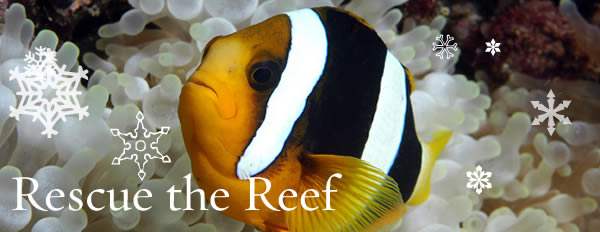
Help protect the last great places on Earth with these holiday gifts that benefit The Nature Conservancy's work:
1. Give a gift membership.
2. Help protect the world's most extraordinary forests through The Nature Conservancy's Adopt an Acre program.
3. A holiday gift to Rescue the Reef, a program that helps conserve coral reefs, one of the most endangered--and important--wildlife habitats on Earth.
4. Shop for apparel and other items at The Nature Conservancy's store.
Wednesday, December 06, 2006
The End of a Great Fishing Season
 Jerry Jeffery, 2006 visitor center host 2006
November 30, 2006 marked the end of a great fishing season at the Silver Creek Preserve. We had over 7,000 visitors this year from every US state and fourteen countries! Dramatic spring flows altered the creek in many ways--creating new habitat and new challenges for fishermen. And although hatches were a little different in timing and frequency this year and stream conditions in some places very different, fishing reports were great all summer and fall. September and October saw much heavier angler numbers than last year probably due to the beautiful weather and active fish.
A big thank you to all the people who volunteered this summer. We had several visitor center hosts and hostesses as well as people who came out just for the day. We could not have had such a successful summer without all of you.
We look forward to next season, have a great winter!!
--Dayna and the Silver Creek Staff
Subscribe to:
Posts (Atom)