Tuesday, December 26, 2006

Winter events at Silver Creek Preserve


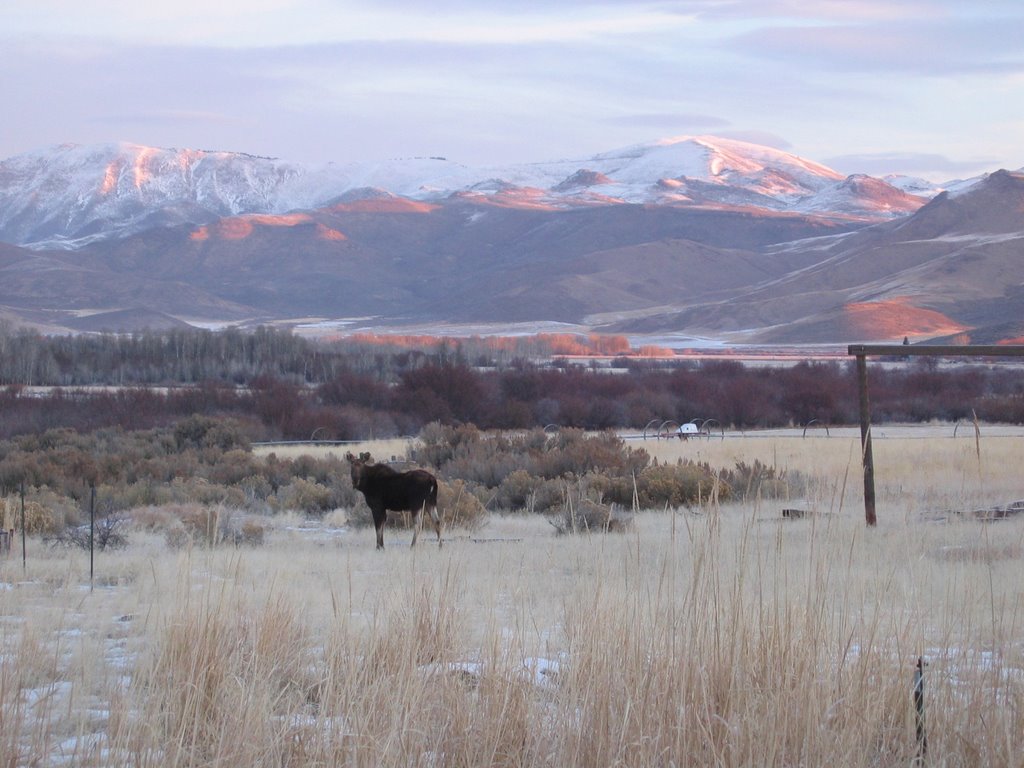
There are several events planned this winter at the Silver Creek Preserve. The following is a list of events organized by the Environmental Resource Center of the Wood River Valley. Silver Creek staff will be helping to lead the tours around the Preserve and there are bound to be great things to see. The winters bustles with activity-- waterfowl, swans, eagles, elk, deer, moose often make appearances-- so put your warm clothes on and come on down.

Birding on Snowshoes
Saturday January 27, Saturday February 24, and Saturday March 31st 10 am- 2 pm
An adventure viewing birds in the Silver Creek area. Carpools meet at the Hailey Park and Ride at the corner of River Street and Bullion st.
Free to ERC members
Donation to ERC requested ($15) for non- members and ($25) for families of 3 or more.


Coming of Spring Walks
Saturdays: 3/3, 3/10, 3/17, 3/24, 10 am- 2 pm
Discover the coming of spring with the ERC on nature walks to Silver Creek Preserve. Watch spring unfold by noticing changes in the abundant flora and fauna. Groups will meet in Hailey at the corner of Bullion st. and River st. at the Park-and-Ride lot.
Free to ERC members
Donation to ERC requested ($15) for non- members and ($25) for families of 3 or more.

Tuesday, December 19, 2006

A Gift To Idaho

"Christmas came to Idaho early this year," Governor Jim Risch said yesterday at a press conference in his office. Risch was there to announce Idaho's newest state park, Ritter Island--a gift from The Nature Conservancy to the state.

Ritter Island has been owned and managed by the Conservancy since 1986. Since Idaho Department of Parks and Recreation has a vision

The gift includes a one million dollar endowment for the state to manage its new state park. This money was given in 1986 to the Conservancy and was invested wisely, thus enabling the state to manage the park without straining its budget.

The Conservancy has owned Ritter Island since 1986, and has managed it as Thousand Springs Preserve. The island includes a historic rock house and dairy farm built by businesswoman Minnie Miller in 1920. The facilities remain in excellent condition. The Minnie Miller Falls on the property are the largest intact springs along the Middle Snake River.

The Conservancy’s goal in the Thousand Springs area was to protect the springs and unique wildlife they support. The scenic site has also been a popular recreation area and many visitors have expressed an interest in touring the historic buildings. By donating the property to Idaho to manage as a state park, the Conservancy will ensure the continued protection of the springs and wildlife habitat, while at the same time provide the public with what it wants: more access and interpretive facilities for the history and nature of the island.

“Our work in the Middle Snake River with members and partners is creating a legacy that all Idahoans will be able to enjoy,” says Laura Hubbard, the Conservancy’s Idaho state director. “I thank all of our supporters over the past twenty years who have made this enduring conservation legacy possible. Because of their support and vision, future generations will be able enjoy the natural beauty, unique wildlife and inspiring human history of Ritter Island.”

Read the Idaho Statesman's story on Ritter Island.

Watch KTVB-NBC Channel 7's reporting of the press conference.

Friday, December 15, 2006

Silver Creek Preserve Wraps Up 30th Anniversary Season

With the close of fishing season on November 30 concluded The Nature Conservancy’s 30th anniversary year at Silver Creek Preserve. During the fishing season, which opened May 27, the preserve attracted 7301 visitors representing every U.S. state and 13 countries.

Almost half (49 percent) of all visits were from out-of-state guests Visitors came to the preserve from Austria, England, Japan, France, Switzerland, Canada, Mexico, Australia, Argentina, Germany, Turkey, New Zealand and Peru. The preserve is considered a worldwide fly-fishing destination due to its tremendous insect hatches, an incredible trout population and very visible—but hard to catch—trophy fish.

In fact, 89 percent of the visitors to the preserve came to fish. About 18 percent used one of the five guide services that operate on Silver Creek. The rest of the visitors enjoyed birding, hiking and canoeing on the 880-acre property.

While some of the hatches changed this season due to early high water, anglers found excellent an excellent trico hatch and a strong fish population. The largest trout ever recorded caught on the creek, a 33-inch brown, was landed this summer by a former Silver Creek intern.

The preserve was created 30 years when The Nature Conservancy purchased the 479-acre property known as Sun Valley Ranch. The ranch had been up for sale and Jack Hemingway—son of Ernest Hemingway and a commissioner for the Idaho Department of Fish and Game—believed the property should be preserved for future generations. Hemingway sought the Conservancy to purchase the property as a nature preserve.

An important part of the conservation success along Silver Creek has been the donation of conservation easements by other landowners in the valley. To date, 22 landowners have donated nearly 10,000 acres of easements, protecting nearly the entire main stem of Silver Creek from development.

“The number of visitors that enjoy Silver Creek each year is a great testament to the conservationists who worked so hard to make this preserve possible,” says Dayna Smith, Silver Creek preserve manager. “They have created a tremendous conservation legacy in this valley. Future generations from all over the globe will be able to continue to enjoy world-class fishing, abundant wildlife and a rural setting due to their hard work and vision.”

The Conservancy hosted activities throughout the season to celebrate the preserve’s anniversary, including a gala event for the preserve’s founders at nearby Loving Creek Ranch, an opening weekend barbecue, nature walks and educational seminars. The organization also published a commemorative booklet, available free at the preserve and the Conservancy’s state headquarters in Hailey.

While the fishing season and anniversary celebrations are over for the year, the preserve remains open to public use.

“It is truly a beautiful time of year to be here,” says Smith. “Waterfowl have congregated in the wetlands, bald eagles fly overhead and the winter light is stunning.”

The Conservancy has ambitious plans for the preserve and Silver Creek watershed in the coming years. Uplands habitat restoration, a study looking at sediment and temperature issues in Kilpatrick Pond, stream bank enhancements, birding and nature walks, and a symposium to discuss Silver Creek and Big Wood conservation issues are a few of the things planned for 2007.

“By working together, we can ensure that the preserve continues to be a special place for people and nature,” says Smith. “The Nature Conservancy thanks the many people who contributed to the preserve over the past thirty years. We look forward to continuing to work with the community to protect this place for many, many decades to come.”

Wednesday, December 13, 2006

Give the Gift of Nature This Holiday


Help protect the last great places on Earth with these holiday gifts that benefit The Nature Conservancy's work:

1. Give a gift membership.

2. Help protect the world's most extraordinary forests through The Nature Conservancy's Adopt an Acre program.

3. A holiday gift to Rescue the Reef, a program that helps conserve coral reefs, one of the most endangered--and important--wildlife habitats on Earth.

4. Shop for apparel and other items at The Nature Conservancy's store.

Wednesday, December 06, 2006

The End of a Great Fishing Season

Jerry Jeffery, 2006 visitor center host 2006

November 30, 2006 marked the end of a great fishing season at the Silver Creek Preserve. We had over 7,000 visitors this year from every US state and fourteen countries! Dramatic spring flows altered the creek in many ways--creating new habitat and new challenges for fishermen. And although hatches were a little different in timing and frequency this year and stream conditions in some places very different, fishing reports were great all summer and fall. September and October saw much heavier angler numbers than last year probably due to the beautiful weather and active fish.

A big thank you to all the people who volunteered this summer. We had several visitor center hosts and hostesses as well as people who came out just for the day. We could not have had such a successful summer without all of you.

We look forward to next season, have a great winter!!

--Dayna and the Silver Creek Staff

Hemingway in Idaho


Why does The Nature Conservancy own Ernest Hemingway’s last home? The answer lies within the beautiful Idaho landscape that he loved. A special report on The Nature Conservancy's web site.

Tuesday, November 28, 2006

The Importance of Private Timberlands

Privately owned timberlands offer many benefits for both people and wildlife. In northern Idaho, for instance, timber company lands often provide important migration paths for mammals like elk, moose, grizzly bear, wolverine and fisher. These lands are also home to endangered species and provide cold water streams for bull trout and cutthroat trout. Many of the lands are open to the public and are popular places for hunting and hiking.

With development prices soaring, many timber companies are selling these lands for home or recreational property development. This development cuts off public access, introduces non-native weed species and can fragment wildlife habitat.

The Nature Conservancy works with timber companies to conserve these working forests. In Idaho, the Conservancy has worked with Potlatch Forest Holdings to conduct a biologically inventory of the company’s lands for endangered species, rare plants, roadless areas and key wildlife habitat.


In 2004, Potlatch announced its decision to certify all of its lands—including 600,000 acres in Idaho--as sustainably grown under Forest Stewardship Council (FSC) and Sustainable Forest Initiative (SFI) certification. These certifications require conservation plans for wildlife.

Last week, The Nature Conservancy made an announcement of a Potlatch project in another state: The creation of a new wildlife management area in Arkansas on Potlatch lands. This will include a 16,000-acre easement, the largest ever established in Arkansas.

This area will be open for public recreation, and will provide important habitat for endangered species like the red-cockaded woodpecker (below) and American alligator, and game species like deer, turkey and bobwhite quail.

Tuesday, November 21, 2006

World's Most Unusual Hotel?

This week in Nature Stories, The Nature Conservancy's podcast, travel to Sweden for a stay in what may be the world's most unusual hotel--a hotel constructed entirely of ice. Each year, this incredible structure is rebuilt using 3000 tons of snow and ice. Ice sculptures, an ice church and a domed bar serving vodka in ice glasses are just a few of the "amenities" in this engineering marvel.

The Nature Stories podcast explores our many ways of relating to the natural world. In this episode, correspondent William S. Hammack explores how from the icy climate of the Arctic comes art, grandeur and some very frigid sleeping quarters.

Thursday, November 16, 2006

Idaho Weed Awareness Campaign's New Site


The photo above isn't of a pretty flower; it's a highly invasive, non-native weed: dalmatian toadflax. Non-native weeds like these can ruin wildlife habitat, agricultural fields and rangelands, and cost Idahoans millions of dollars to control each year.

Since 2001, the Idaho Weed Awareness Campaign has been educating the public on how they can stop the spread of non-native weeds. The new web site includes a weed field guide, information on weed free hay for horesback trips in the backcountry and other useful information. Mountain Visions, a Boise digital media firm, will be installing panoramic views of Idaho landscapes in the near future.

The Nature Conservancy of Idaho contributes to the campaign and hopes all Idahoans learn how they can stop the spread of noxious weeds.

Monday, November 13, 2006

Montana Chapter News: Centennial Valley Ranch Purchased


The Nature Conservancy's Montana Chapter has announced the purchase of a 11,500-acre ranch in the Centennial Valley. This valley is part of the Greater Yellowstone area, and is used by wildlife that migrates to Henry's Lake, Idaho, including pronghorn and elk.

“This deal is huge,” says the Conservancy’s Tim Swanson, “not only because the ranch is within one of the most significant natural landscapes in Montana, but because of the richness of the ranchland itself.”

The purchase is part of an on-going effort to preserve this remote valley’s ranching history and rich wildlife habitat. So far, the Conservancy, area landowners and government agencies have used conservation easements and land acquisition to protect around 38,000 of the 100,000 acres of private land in the valley.

“This purchase guarantees that this ranch and the surrounding working landscape will retain its rural wildlife-rich character that hasn’t changed much in centuries,” added Swanson, southwest Montana program director for the Conservancy.

Wednesday, November 08, 2006

Proposition 2 is Defeated

Proposition 2--a ballot measure The Nature Conservancy considered detrimental to Idaho's working farms and ranches, wildlife habitat and quality of life--was soundly defeated in yesterday's election. Latest poll results show that 76% of Idaho voters voted against the measure.

The Nature Conservancy joined a broad coalition of organizations including chambers of commerce, industry groups, conservationists and neighborhood organizations in opposing the measure.

Tuesday, October 31, 2006

Opinion: Proposition 2 Endangers Idaho's Way of Life

Ken Pursley, the Idaho Chapter's board chair, presents The Nature Conservancy's opposition to Proposition 2 in this editorial in the Idaho Statesman.

Nature Conservancy Holds Photo Contest


The Nature Conservancy is holding its first digital photography contest. Enter your photos that capture the diversity of life on Earth. Your own original digital images of our lands, waters, plants, animals and people in nature are all eligible for the competition. Images can be submitted to one of two categories: Best Nature Photo or Best Photo from a Conservancy Preserve.

Monday, October 23, 2006

Waterfowl hunting season underway at Silver Creek

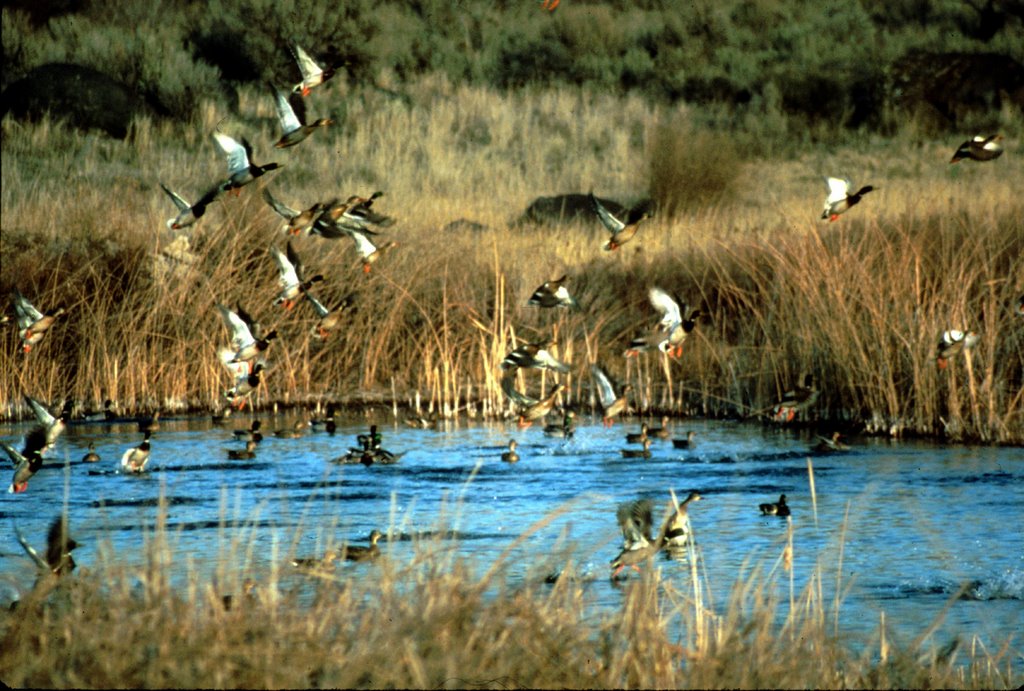
Fall waterfowl, photo by Guy Bonnivier

Waterfowl hunting is well underway at the Silver Creek Preserve and throughout Idaho. Waterfowl hunting is allowed at the preserve on Wednesdays, Saturdays and Sundays only and with limited hours until the end November (the end of fishing season). Hunting rules at the preserve are very specific, so be sure to thoroughly read through the rules posted at the visitor center prior to hunting. You can also visit with staff from 6-9 a.m. at the center on hunting days.
There are many different users of Silver Creek- birders, fishermen, school groups, canoers. Please follow the rules and respect other users!! Have fun and be safe!!!

Friday, October 20, 2006

Nature Conservancy Opposes Proposition 2

After careful deliberation, the Board of Trustees of the Idaho Chapter of The Nature Conservancy has voted to oppose Proposition 2. We believe that this ballot measure poses a direct threat to what Idahoans value most about our state, including family farms and ranches, wildlife, clean water, outdoor recreation, and our way of life.

The Nature Conservancy is a strictly non-partisan group that works through voluntary agreements with landowners. We believe in conserving Idaho’s great places by using cooperation, free market solutions, and a business-like approach. And we respect property rights in all we do.

The Idaho Chapter’s decision is unprecedented. In our 30 years of work in this state, we have never taken a position on a ballot issue – until now. We step forward only due to the depth of our concerns about Proposition 2.

The backers of Proposition 2 claim that the measure is needed to ensure that eminent domain could never be used to take private property for private commercial development purposes – as was permitted in the U.S. Supreme Court’s controversial decision in Kelo v. City of New London. The truth is that the Idaho Legislature passed House Bill 555 last spring to restrict eminent domain for commercial development and effectively overturn the Kelo case in Idaho. Proposition 2 is not really about eminent domain.

The real damage of Proposition 2 would come from a separate section found deep in the text of the measure. This provision can be read to require taxpayers to compensate developers when new laws and ordinances prevent them from pursuing the densest subdivision development or “highest” use of their land. This sweeping financial entitlement has never been a feature of America’s law of property rights.

If Proposition 2 is approved, we question whether communities will be able to manage our state’s rapid growth or whether working farms and ranches—essential to our state’s economy—would be able to survive.

The only certainty we see in Proposition 2 is litigation, confusion, expense, and new burdens on the taxpayer. In the places we work, those are not good things for anyone.

The Nature Conservancy is a property owner in Idaho, at places such as Silver Creek, Cougar Bay, and Thousand Springs. Our neighborhoods include family farms and ranches, private timberlands, rural communities, and vital wildlife habitat. Wherever we work, we believe that one of our most important duties is to be a good neighbor.

We feel compelled to speak out because Proposition 2 is bad for our neighborhoods. If you care about our agricultural and forestry economies; hunting, fishing and outdoor recreation; healthy neighborhoods and private ranches, Proposition 2 threatens what you value.

Our choices today will shape our legacy for future generations. By voting “no” on Proposition 2, we can help to ensure a future that includes what we love most about Idaho.

Contact: Will Whelan at 208-350-2202

Tuesday, October 17, 2006

Redband Trout


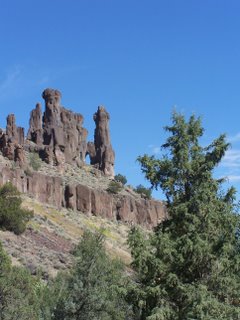
The Nature Conservancy considers the Owyhees, the high desert country located in the southwest corner of the state, to be one of its highest conservation priorities in the state. This vast, five-million-acre county contains some of the best sagebrush habitat left in the country, and is also home to a long ranching tradition. The Conservancy has been a member of the Owyhee Initiative to create solutions to land use issues in the county, and also works on a number of on-the-ground conservation projects in the Owyhees.

The Owyhees are home to a variety of unique creatures, many of which live in the sagebrush habitat. But the rivers are also home to an interesting fish: the redband trout. This trout—a subspecies of rainbow trout—can be found in a number of rivers throughout the county.

High desert redband trout can survive at higher temperatures than any other trout species. This enables them to survive when desert temperatures soar in the summer. The trout face threats from introduced smallmouth bass in some rivers, and also from declining water quality.

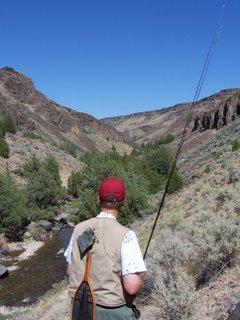
On a recent visit to the Owyhees, my wife and I fished for this beautiful fish. In most rivers, you will not catch large fish, but you can catch many of them. Their colors are often quite vivid. The rugged canyon scenery is spectacular, and wildlife is abundant.


Although more people are visiting the Owyhees from rapidly growing Boise and the Treasure Valley, you can still find solitude and wild landscapes to explore. The Owyhee Initiative’s goal is to protect wilderness and wild and scenic rivers in the Owyhees so future generations can continue to experience the magic of the high desert.

Wednesday, October 11, 2006

Malpais Borderlands Group

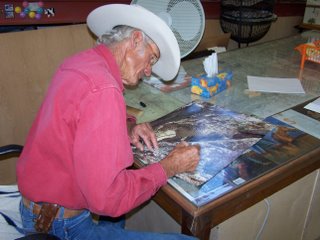
Rancher and conservationist Warner Glenn signs a poster of his latest jaguar photo, taken near his ranch in southern Arizona.
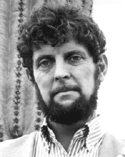
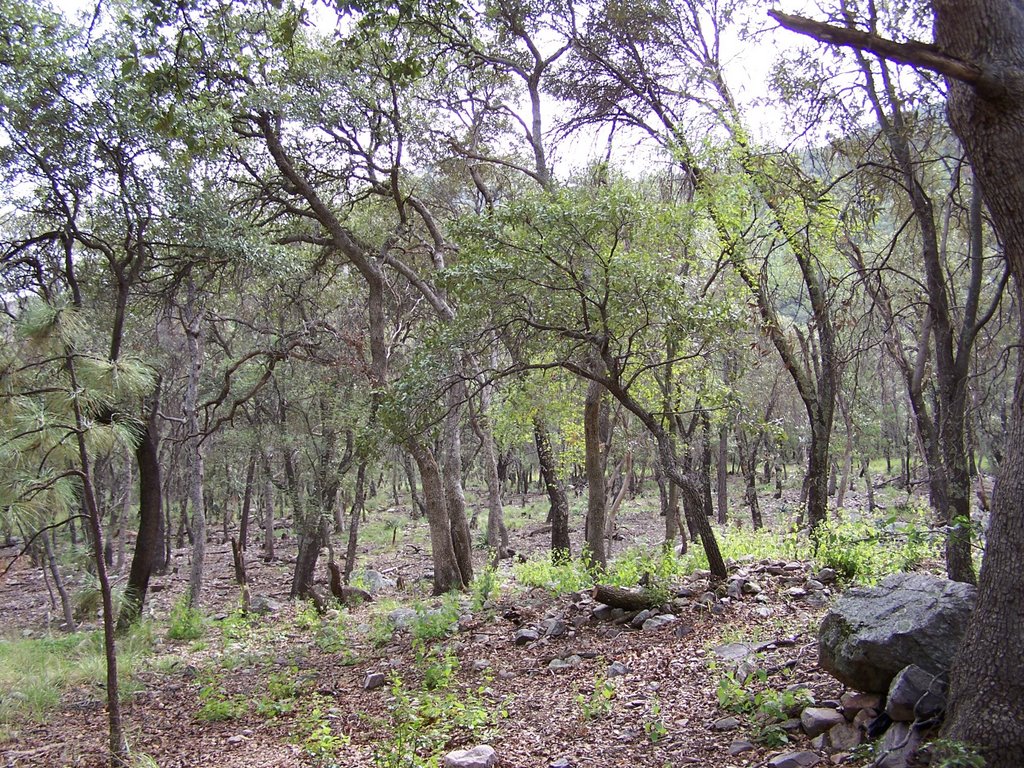
Around the world, The Nature Conservancy works as a partner with rural communities, farmers and ranchers. Conservation easements remain a powerful tool for protecting rural economies and wildlife habitat.

The Idaho Chapter works with ranchers on many projects, including in the Owyhee Canyonlands, Henry’s Lake, Silver Creek, the Pahsimeroi River Valley and the Kootenai Valley.

On a recent trip to southern Arizona, I had the opportunity to visit another successful Conservancy partnership with ranchers. The Malpais Borderlands Group of Arizona is a grassroots group of ranchers who have created a non-profit organization to demonstrate that ranching and conservation can thrive together. Their work includes conservation easements, fire management, endangered species conservation and an active research program.

Their seminars showcasing their conservation-minded ranching have drawn people from all over the world—including Masai herders from Kenya, Mongolian park managers and U.S. livestock ranchers—to their ranches along the Mexican border. The project also published a recent book, Working Wilderness.

Ranchers Warner and Wendy Glenn, who own the Malpais Ranch, hosted Nature Conservancy staff on their ranch during my trip. Warner is well known not only as a rancher and conservationist, but also as one of the best lion hunting guides in the West. In 1996, his hounds located a jaguar in southern New Mexico, near the project. Glenn photographed this beautiful animal and wrote a booklet on it, using this to showcase the importance of conservation in this region.

This year, he once again saw a jaguar in New Mexico. He is the only person to have seen a jaguar in the United States in the past decade. Glenn speaks of the thrill of seeing these elusive animals and the need for large-scale conservation projects that continue to allow them to roam into the United States. It was inspiring to hear this articulate conservationist talk about this beautiful country and the amazing wildlife found in it.

Later we hiked into the Arizona grasslands where this jaguar was spotted. It is still wild, rugged country. While the chances of seeing a jaguar are incredibly small, it is nice knowing that these beautiful animals still roam here. And it’s even nicer to know that the work of ranchers in the Malpais Borderlands Group will provide habitat for jaguars and other animals for future generations.

Thursday, October 05, 2006

Author Nabhan to Speak on Local Food, Local Lands


The Lava Lake Foundation for Science and Conservation together with The Nature Conservancy and Wood River Land Trust present: "Local Foods, Local Landscapes: Linking Food Systems and Land Conservation," an evening with Gary Paul Nabhan, PhD.

Join us for a lecture by Dr. Nabhan on Friday, October 6th, from 7:00 to 8:00 PM at the Liberty Theatre in Hailey. Dr. Nabhan will discuss the links between food production, local economies, and conservation in the West.

Tickets are $5.00 at the door. Gary Paul Nabhan is a writer, lecturer, and world-renowned conservation scientist.

He is Director of the Center for Sustainable Environments at Northern Arizona University, where his current work is the marketing of place-based heritage foods as a means to support land conservation in rural communities of the Intermountain West. Nabhan has received a MacArthur "Genius" award, a liftime achievement award from the Society of Conservation Biology, and a John Burroughs Medal for Nature Writing.

The Liberty Theatre is located at 110 North Main Street in Hailey. For more information, email Heather Kimmel or phone her at 208- 788-3947.

Wednesday, October 04, 2006

Nature Conservancy Destination: Southern Arizona

Last week, I had the opportunity to visit several Nature Conservancy projects in southern Arizona. On any travel, it pays to check out chapter web sites to see if you can include a trip to one of our preserves in your visit.

Southern Arizona has some of the most well-known preserves in the country. Ramsey Canyon Preserve is located where the Sierra Madre of Mexico, the Rocky Mountains and the Sonoran and Chihuahan deserts come together. The mountains, which arise abruptly from the surrounding desert, creates habitat for a tremendous diversity of species.

The terrain here looks more like forest I saw in Australia than the saguaro-filled landscape near Tucson. Stunning rock formations can be seen from the hiking trails that wind through the preserve.

The preserve is best known as a destination for birders. As many as 14 species of hummingbirds can be found here, as well as tropical species like the elegant trogon. I arrived a bit too late for the hummingbird migration, but I did see plenty of beautiful lizards, the Ramsey Canyon leopard frog and a number of Coues deer: At other times of year, visitors may see javelina, coati, black bear and a tremendous variety of birds. The preserve includes several ponds, constructed to mimic wetlands that once were found in this valley, located along the stream. These ponds are part of a project to conserve Ramsey canyon leopard frog, a rare species found nowhere else on earth. These frogs can be easily seen during a visit.

The preserve includes a great interpretive facility and gift shop with books, birding supplies and Nature Conservancy clothing.

It is located about 1.5 hours from Tucson and makes a nice stop during a trip to see other popular tourist sites in the area, including Saguaro National Park, the Arizona-Sonora Desert Museum and Tombstone.

Visit a Nature Conservancy preserve, and see firsthand how your investment is paying off.

Tuesday, October 03, 2006

Owyhee Initiative offers hope for unique landscape

Lou Lunte, director of conservation programs for The Nature Conservancy's Idaho Chapter, explains why the Owyhee Initiative breaks a cycle of contentious and often bitter land use debates in the beautiful high desert of Owyhee County, in this Idaho Statesman Reader's View.